Is the 2019 Alfa Romeo Giulia Ti Sport Carbon Fiber Air Intake Worth It? Performance, Sound & Upgrade Guide


When you own a car like the Alfa Romeo Giulia Ti Sport, you’re not just driving—you’re experiencing Italian engineering, sharp performance, and unmistakable style. But for enthusiasts, “stock” is rarely the end of the story. One of the most popular upgrades people consider is a carbon fiber air intake system.
So the real question is: Is the 2019 alfa romeo giulia ti sport carbon fiber air intake actually worth it?
Let’s break it down—performance gains, sound improvements, cost, and whether this upgrade truly delivers on its promise.
Why This Upgrade Matters
Modern turbocharged engines like the Giulia’s 2.0L inline-4 are incredibly efficient—but also heavily restricted from the factory. Automakers design intake systems to balance cost, noise regulations, and emissions compliance, not maximum performance.
That’s where aftermarket upgrades come in.
A carbon fiber air intake aims to:
- Increase airflow to the engine
- Improve throttle response
- Enhance engine sound
- Add aesthetic value under the hood
For drivers who want a sharper, more engaging ride without major engine modifications, this is often one of the first upgrades on the list.
Understanding the Stock Intake System
Before judging the upgrade, it’s important to understand what you’re replacing.
The factory intake on the 2019 Giulia Ti Sport:
- Uses a plastic airbox
- Is designed for quiet operation
- Restricts airflow slightly for efficiency and emissions
- Prioritizes reliability over performance
While it’s perfectly functional, it’s not built to maximize horsepower or sound.
What Is a Carbon Fiber Air Intake?
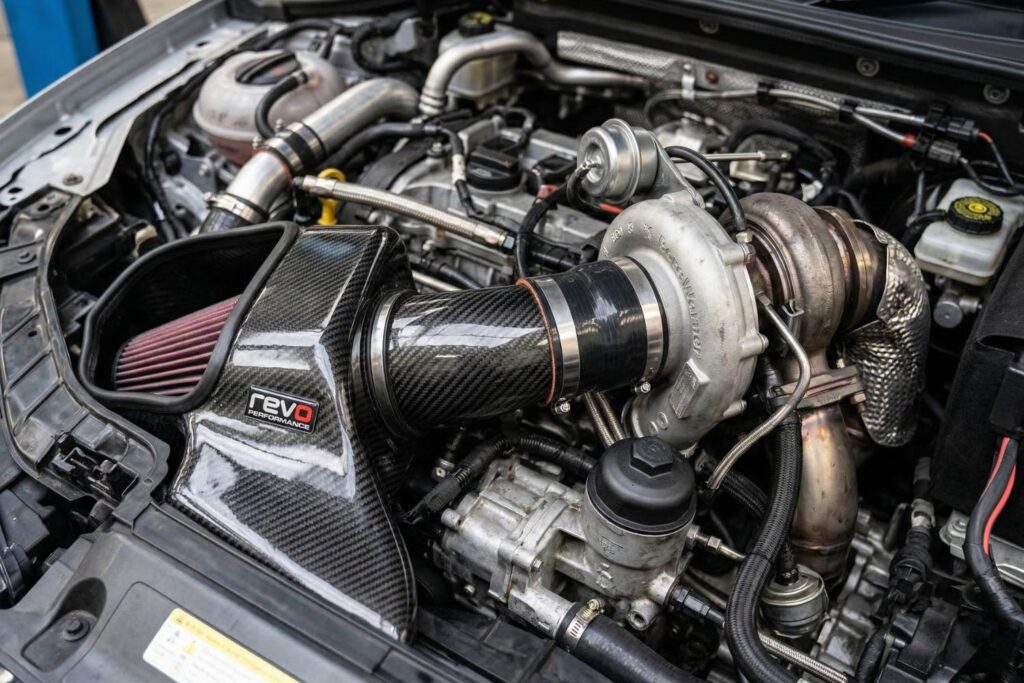
A carbon fiber air intake system replaces the stock airbox and piping with lightweight, high-flow components.
Key Features:
- Carbon fiber housing: Lightweight and heat-resistant
- High-flow air filter: Allows more air into the engine
- Optimized airflow design: Reduces restriction
Carbon fiber isn’t just about looks—it also helps reduce heat soak, keeping incoming air cooler, which can improve combustion efficiency.
Performance Gains: Real or Overhyped?
This is where most buyers focus—and rightly so.
Expected Gains
Most aftermarket brands claim:
- +5 to +15 horsepower
- Slight torque improvement
- Better throttle response
Reality Check
Let’s be honest:
A carbon fiber intake alone won’t transform your Giulia into a race car.
However, what you will notice:
- Quicker acceleration feel
- More responsive throttle
- Smoother airflow at higher RPMs
Performance Breakdown
| Upgrade Type | Horsepower Gain | Noticeability |
|---|---|---|
| Stock Intake | Baseline | — |
| Carbon Fiber Intake | +5–15 HP | Moderate |
| Intake + ECU Tune | +20–40 HP | Significant |
👉 Insight: The intake shines when paired with other upgrades like ECU tuning or exhaust systems.
Sound: The Most Noticeable Upgrade

If performance gains are modest, sound is where this upgrade truly delivers.
What Changes?
With a carbon fiber intake, you’ll hear:
- Turbo spool more clearly
- Louder intake suction
- Subtle “whoosh” under acceleration
This transforms the driving experience—especially for enthusiasts who enjoy auditory feedback.
Driving Experience Impact
- City driving: Slightly more aggressive tone
- Highway pulls: Noticeable turbo sound
- Sport mode: More engaging and emotional
👉 For many owners, the sound alone justifies the upgrade.
Aesthetic Appeal: Style Under the Hood
Let’s not ignore one big factor—looks.
Carbon fiber intakes:
- Add a premium, motorsport-inspired appearance
- Instantly upgrade engine bay aesthetics
- Impress at car meets or showcases
For a car like the Giulia, which already emphasizes design, this is a natural fit.
Installation: Easy or Complicated?
Good news—this is one of the easier upgrades.
Installation Overview
- Time required: 30–60 minutes
- Tools: Basic hand tools
- Skill level: Beginner to intermediate
Most kits are designed as direct bolt-on replacements, meaning:
- No cutting required
- No permanent modifications
👉 If you’re comfortable opening your hood and using a wrench, you can likely install it yourself.
Cost vs Value
Let’s talk numbers.
Price Range
- Basic intake systems: $300–$500
- Premium carbon fiber systems: $600–$1,200+
Is It Worth the Price?
It depends on your goals:
| Goal | Worth It? |
|---|---|
| Maximum horsepower | ❌ Not alone |
| Better driving feel | ✅ Yes |
| Improved sound | ✅ Absolutely |
| Engine bay aesthetics | ✅ Yes |
👉 Verdict: It’s a lifestyle upgrade as much as a performance one.
Pros and Cons
✅ Pros
- Improved airflow and throttle response
- Enhanced turbo sound
- Premium carbon fiber design
- Easy installation
- Lightweight construction
❌ Cons
- Limited horsepower gains alone
- Expensive compared to basic intakes
- Gains may not justify cost for some users
Who Should Buy It?
This upgrade is ideal for:
✔ Enthusiasts Who:
- Enjoy hearing their engine and turbo
- Want a more engaging driving experience
- Plan to add future performance mods
❌ Not Ideal For:
- Budget-focused drivers
- Those expecting major power gains
- People who prefer a quiet ride
Best Upgrade Combinations
To maximize value, combine your intake with:
1. ECU Tune
Unlocks real performance gains by optimizing airflow.
2. Performance Exhaust
Pairs perfectly with intake sound upgrades.
3. Intercooler Upgrade
Improves air temperature and efficiency.
Frequently Asked Questions (FAQ)
1. Does a carbon fiber air intake void warranty?
Not necessarily. However, some dealers may question engine-related claims. Always check your warranty terms.
2. Will it improve fuel efficiency?
In most cases, no significant change. Driving style has a bigger impact than the intake.
3. Is tuning required after installation?
No, but tuning helps unlock the full potential of the intake.
4. Does it require maintenance?
Yes. The air filter should be cleaned or replaced periodically (usually every 10,000–15,000 miles).
5. Is carbon fiber better than aluminum or plastic?
Carbon fiber offers better heat resistance and aesthetics, but performance differences are usually minor.
Final Verdict: Is It Worth It?
The 2019 alfa romeo giulia ti sport carbon fiber air intake is not a must-have—but it is a highly rewarding upgrade for the right driver.
If you’re expecting massive horsepower gains, you might be disappointed. But if you want:
- A sharper driving feel
- A more aggressive sound
- A premium under-the-hood look
Then yes—it’s absolutely worth considering.
Think of it less as a raw performance upgrade and more as an experience enhancer. And for many Alfa Romeo owners, that’s exactly what makes driving special.