Difference Between Mule Deer and Whitetail: Identification, Seasons & Hunting Strategies
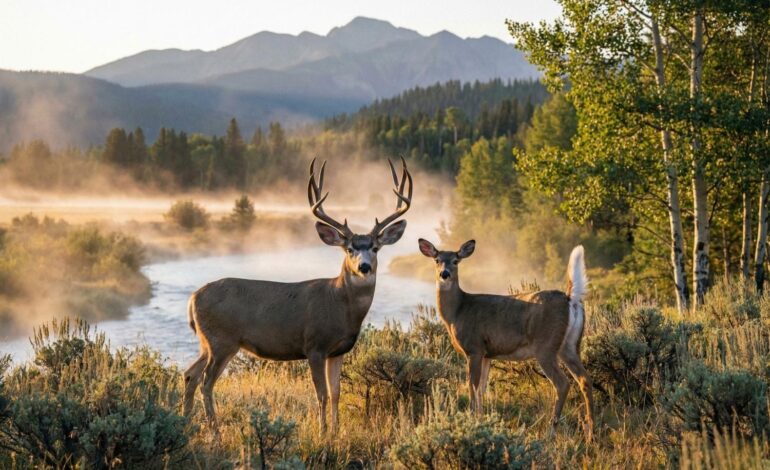

Understanding the difference between mule deer and whitetail is essential for hunters, wildlife enthusiasts, and conservationists alike. Although both species belong to the deer family and share similar physical traits, their behavior, habitat preferences, hunting seasons, and survival strategies differ significantly. Misidentifying these animals can lead to missed hunting opportunities or even legal issues during regulated seasons.
In this comprehensive guide, we will break down every major distinction between mule deer and whitetail deer. From physical identification and habitat range to seasonal behavior and proven hunting strategies, this article provides everything you need to confidently tell them apart and hunt them effectively.
Overview of Mule Deer and Whitetail Deer
Mule deer (Odocoileus hemionus) and whitetail deer (Odocoileus virginianus) are the two most common deer species in North America. While they are closely related, evolution has shaped them differently based on terrain, climate, and predator pressures.
Mule deer are typically found in western regions with open landscapes, while whitetail deer dominate eastern forests and agricultural zones. These environmental differences influence everything from their physical features to their movement patterns and reaction to hunters.
Physical Identification Differences
One of the easiest ways to recognize the difference between mule deer and whitetail is by physical appearance.
Ears
- Mule Deer: Very large, rounded ears resembling a mule’s ears
- Whitetail Deer: Smaller, more pointed ears
Antlers
- Mule Deer: Forked antlers that split evenly into two branches
- Whitetail Deer: Single main beam with multiple tines growing upward
Tail
- Mule Deer: Short tail with a black tip
- Whitetail Deer: Long tail with a bright white underside, raised when alarmed
Body Size and Color
- Mule deer are generally heavier with a grayish-brown coat
- Whitetails are slightly smaller and more reddish-brown
Habitat and Geographic Range
Habitat plays a major role in the difference between mule deer and whitetail behavior and movement.
Mule Deer Habitat
- Open plains
- Desert basins
- Mountain foothills
- Sagebrush and shrubland
Whitetail Habitat
- Dense forests
- Farmland edges
- River bottoms
- Suburban and wooded areas
Mule deer prefer wide-open spaces where visibility is high, while whitetails thrive in cover-rich environments that allow quick escape routes.
Behavior and Movement Patterns
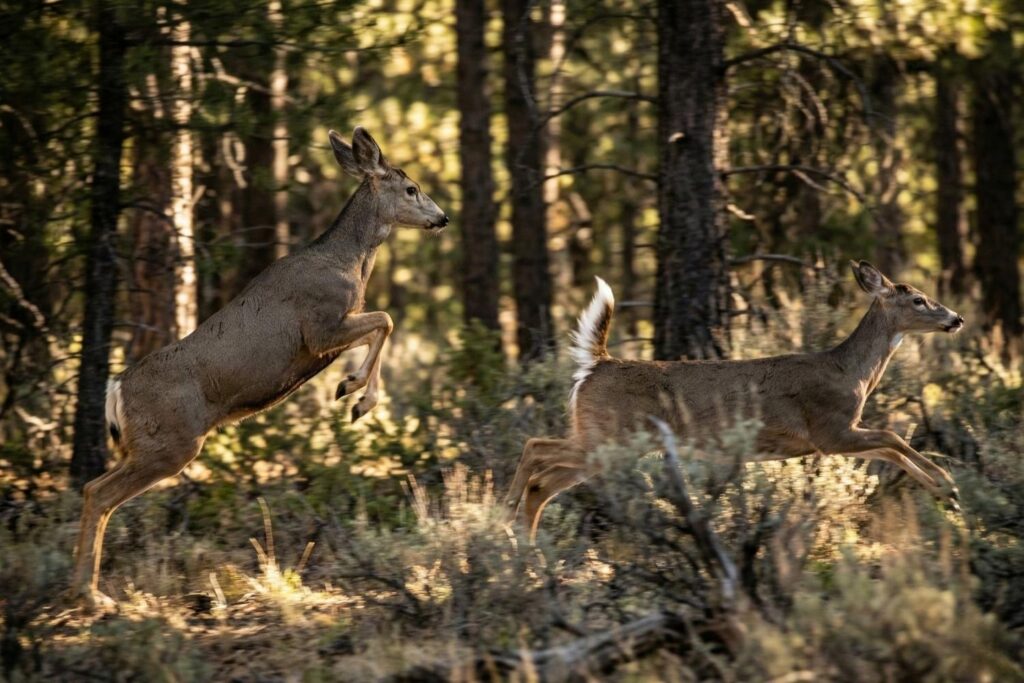
Behavior is another critical factor in understanding the difference between mule deer and whitetail.
Mule Deer Behavior
- Use a unique bounding gait called “stotting”
- More likely to stop and look back at danger
- Travel longer distances daily
- Less adaptable to human development
Whitetail Behavior
- Extremely cautious and alert
- Quick, explosive sprinting when threatened
- Highly adaptable to urban environments
- Strong reliance on cover and wind direction
Whitetails are often considered harder to hunt due to their heightened awareness and ability to disappear instantly.
Seasonal Patterns and Rut Timing
The breeding season, or rut, differs slightly between the two species.
Mule Deer Rut
- Occurs later in the fall
- Bucks roam open areas searching for does
- Increased daytime movement
Whitetail Rut
- Starts earlier in many regions
- Intense chasing behavior
- Scrapes and rubs heavily used
Knowing rut timing is crucial for planning hunts and maximizing sightings.
Hunting Seasons and Legal Considerations
Hunting seasons vary by state and region, but regulations often distinguish clearly between mule deer and whitetail tags.
- Mule deer seasons are usually more limited
- Whitetail seasons are longer and more widespread
- Many areas require species-specific tags
Always verify local regulations before hunting to avoid penalties.
Best Hunting Strategies for Mule Deer
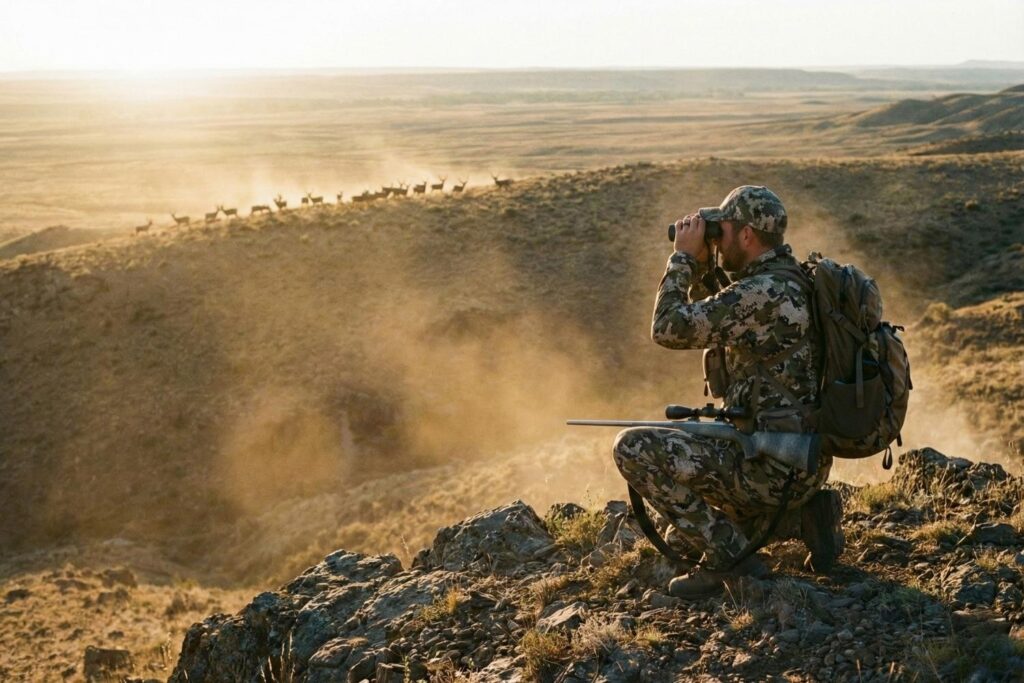
Mule deer hunting requires patience and long-range observation.
Effective Techniques
- Spot-and-stalk hunting
- Long-distance glassing
- Ridge-top observation
- Wind-aware approaches
Because mule deer rely heavily on vision, staying concealed and moving slowly is key.
Best Hunting Strategies for Whitetail
Whitetail deer demand precision and stealth.
Effective Techniques
- Tree stand hunting
- Ground blinds
- Scent control
- Patterning travel routes
Understanding wind direction and minimizing noise are critical when hunting whitetails.
Diet and Feeding Habits
Mule Deer Diet
- Shrubs
- Sagebrush
- Twigs and leaves
Whitetail Diet
- Grasses
- Crops
- Acorns and fruits
Diet influences movement patterns and preferred hunting locations.
Adaptability and Population Trends
Whitetails are among the most adaptable large mammals in North America, thriving even near human settlements. Mule deer populations are more sensitive to habitat loss and climate changes.
This adaptability is a major difference between mule deer and whitetail survival success.
Comparison Table: Mule Deer vs Whitetail
| Feature | Mule Deer | Whitetail Deer |
|---|---|---|
| Ears | Large, rounded | Small, pointed |
| Antlers | Forked | Single beam |
| Habitat | Open terrain | Dense cover |
| Escape Style | Bounding | Sprinting |
| Adaptability | Low | High |
Conclusion
The difference between mule deer and whitetail goes far beyond appearance. From habitat preferences and behavioral traits to hunting strategies and seasonal patterns, these two species require entirely different approaches in the field.
Whether you are a beginner hunter learning identification basics or an experienced outdoorsman refining your strategy, understanding these differences will make you more successful, ethical, and informed. By respecting each species’ unique traits, hunters can enjoy more rewarding experiences while supporting responsible wildlife management.