Understanding the Difference Between a Mule Deer and Whitetail Deer
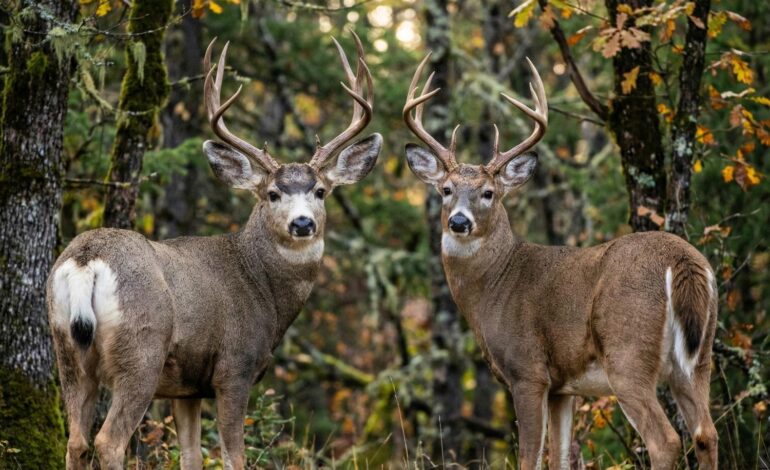

Deer are among the most recognizable and admired wildlife species in North America. Two of the most commonly discussed species are the mule deer and the whitetail deer. While they may appear similar at first glance, there are significant distinctions in their physical features, behavior, habitats, and movement patterns. Understanding the difference between a mule deer and whitetail is essential for hunters, wildlife enthusiasts, photographers, and anyone interested in nature.
This guide explores these differences in detail, offering a comprehensive breakdown that makes identification easy even for beginners.
Overview of Mule Deer and Whitetail Deer
What Is a Mule Deer?
Mule deer (Odocoileus hemionus) get their name from their large, mule-like ears. They are commonly found in western North America, particularly in mountainous regions, deserts, and open plains. Mule deer are well adapted to rugged terrain and are known for their unique bounding gait.
What Is a Whitetail Deer?
Whitetail deer (Odocoileus virginianus) are the most widespread deer species in North America. They are named after the white underside of their tail, which they raise like a flag when alarmed. Whitetails thrive in forests, farmlands, and suburban environments.
Physical Differences Between Mule Deer and Whitetail
Ear Size and Shape
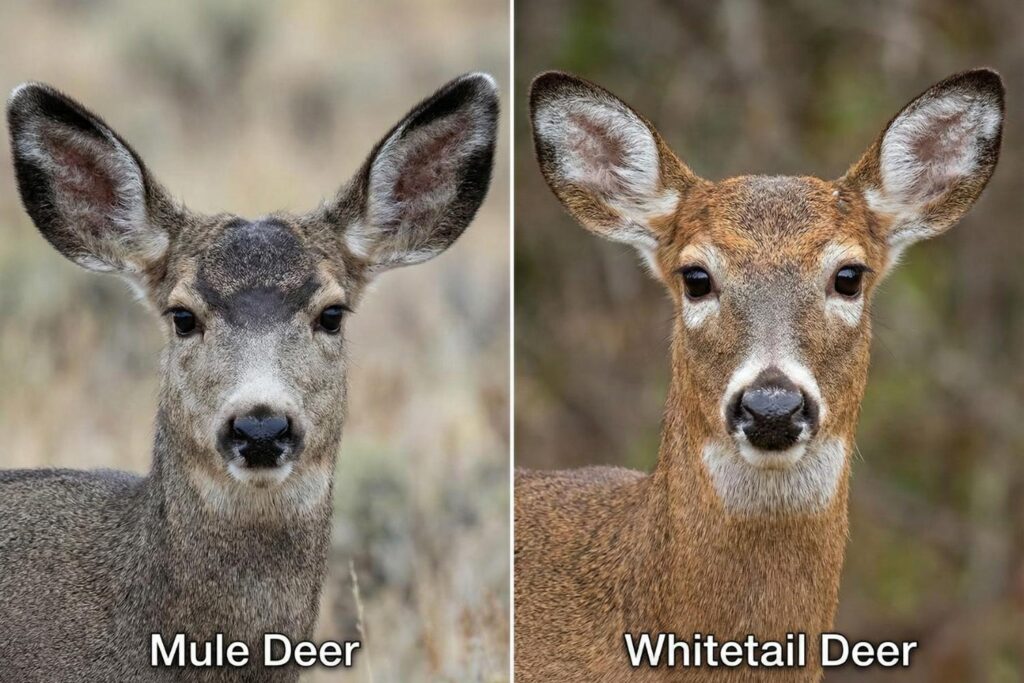
One of the easiest ways to identify the difference between a mule deer and whitetail is by looking at their ears.
- Mule deer have very large ears, often measuring up to three-quarters the length of their head.
- Whitetail deer have smaller, more proportionate ears.
Body Size and Build
- Mule deer typically have a stockier, heavier build.
- Whitetail deer appear slimmer and more agile.
Mule deer also tend to have a deeper chest and shorter legs compared to whitetails.
Tail Differences: A Key Identifier
The tail is one of the most reliable ways to tell these species apart.
- Mule deer tails are white with a distinctive black tip.
- Whitetail deer tails are brown on top but flash bright white underneath when raised.
When a whitetail runs, the raised tail acts as a warning signal to other deer.
Antler Structure and Growth Patterns
Antlers are another major point when understanding the difference between a mule deer and whitetail.
Mule Deer Antlers
- Grow in a forking pattern
- Each tine splits into two as it grows
- Appear more symmetrical and wide
Whitetail Deer Antlers
- Grow from a single main beam
- Tines branch upward from the beam
- Antlers often curve forward
Coat Color and Seasonal Changes
Both species change coat color with the seasons:
- Summer: Reddish-brown for both species
- Winter: Grayish-brown, thicker fur
However, mule deer often appear grayer, while whitetails retain warmer brown tones.
Movement and Gait Patterns
Movement style clearly highlights the difference between a mule deer and whitetail.
Mule Deer Movement
Mule deer use a distinctive bounding motion called stotting. All four legs hit the ground at the same time, helping them navigate rocky or uneven terrain.
Whitetail Movement
Whitetails run in a smooth gallop, with a low, fast stride. This makes them exceptionally quick in dense forests.
Habitat and Geographic Range
Mule Deer Habitat
- Western United States
- Canada and northern Mexico
- Deserts, hills, mountains, open grasslands
Whitetail Deer Habitat
- Eastern and central United States
- Southern Canada
- Farmlands, forests, wetlands, suburbs
Whitetails are more adaptable to human environments than mule deer.
Feeding Habits and Diet
Both species are herbivores, but their diets vary slightly:
- Mule deer prefer shrubs, leaves, twigs, and woody plants
- Whitetail deer consume grasses, crops, acorns, and fruits
This difference allows them to coexist in overlapping regions.
Behavior and Temperament
Mule Deer Behavior
- Less tolerant of human activity
- Often migrate seasonally
- More cautious and observant
Whitetail Behavior
- Highly adaptable
- Often seen near towns and farms
- Known for intelligence and evasiveness
Social Structure and Grouping
- Mule deer often form larger herds, especially during winter
- Whitetail deer usually gather in smaller family groups
During mating season, both species become more solitary and aggressive.
Mating Season and Reproduction
The rut occurs in autumn for both species, but behavior differs:
- Mule deer males rely on displays and sparring
- Whitetail bucks are more aggressive and territorial
Gestation lasts about 200 days for both, resulting in one to two fawns.
Predators and Survival Strategies
Common predators include wolves, mountain lions, bears, and coyotes.
- Mule deer rely on terrain and bounding movement
- Whitetail deer depend on speed and camouflage
Importance in Ecosystems
Both species play a crucial role in:
- Vegetation control
- Seed dispersal
- Supporting predator populations
Understanding the difference between a mule deer and whitetail helps wildlife managers maintain ecological balance.
Hunting and Conservation Considerations
Hunters must correctly identify species due to different regulations.
Conservation efforts focus on:
- Habitat protection
- Population management
- Disease prevention
Responsible practices ensure healthy deer populations for future generations.
Common Myths About Mule Deer and Whitetail
- ❌ Mule deer and whitetails are the same species
- ❌ One is smarter than the other
- ❌ They cannot interbreed (they can, but rarely)
Understanding facts reduces misinformation.
Why Knowing the Difference Matters
Whether you are a hunter, photographer, or nature lover, knowing the difference between a mule deer and whitetail improves:
- Species identification
- Ethical decision-making
- Appreciation of wildlife diversity
Conclusion
While mule deer and whitetail deer share similarities, their differences are clear once you know what to look for. From ear size and tail markings to antler structure and movement style, each species has unique traits shaped by its environment.
Understanding the difference between a mule deer and whitetail deepens your connection to nature and enhances your ability to observe, protect, and respect these remarkable animals.