What Is Sports Analytics and How Is It Changing Modern Sports?
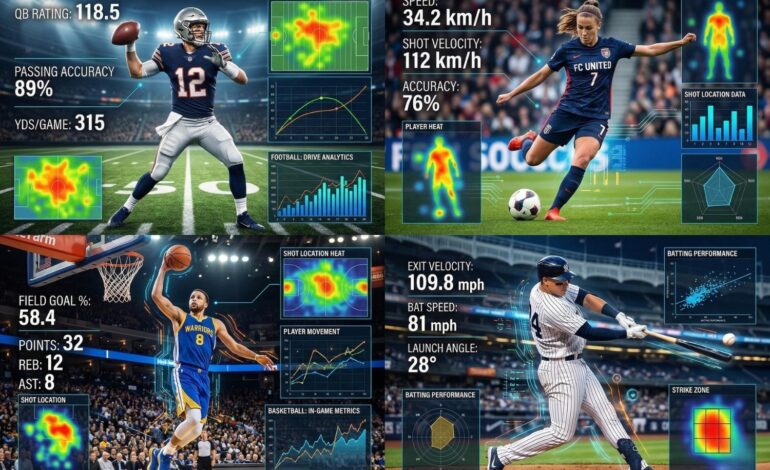

In the modern era of sports, the difference between victory and defeat is no longer decided just by passion, skill, and hard work. A quiet revolution is reshaping the competitive landscape of every major sport — from soccer stadiums in Europe to basketball courts in the United States and cricket grounds in Asia.
This revolution is rooted in data — its collection, interpretation, and intelligent application. Today’s teams are leveraging vast mountains of information to make strategic decisions that were simply unimaginable decades ago. At the heart of this transformation lies what is sports analytics — a discipline that combines data science, statistics, and human insight to elevate athletic performance and change how sports are played, managed, and enjoyed.
In this comprehensive article, we’ll explore what sports analytics really means, why it matters, how it’s transforming professional sports, and what the future holds for teams, players, and fans alike.
What Is Sports Analytics? A Human‑Centered Definition
At its core, sports analytics refers to the scientific analysis of sports performance and trends using data. Rather than relying on instinct or tradition alone, teams now turn to measurable evidence to understand performance strengths and weaknesses.
Simply put, analytics answers deeper questions like:
- Why did a team lose momentum in the fourth quarter?
- Which training adjustments improve a player’s sprint speed?
- What lineup maximizes offensive efficiency?
- How can injury risk be identified earlier?
While the phrase may sound technical, the goal is deeply human: to help athletes perform their best, coaches make smarter decisions, and organizations compete at the highest level.
A Historical Snapshot: How Analytics Entered the Arena
Sports analytics didn’t appear overnight. Its roots stretch back decades:
📉 The Early Days
In the early and mid‑20th century, coaches and managers started tracking simple statistics — goals scored, batting averages, yards gained. These numbers offered basic insight but lacked deeper context.
📊 The Sabermetrics Breakthrough
The real turning point came in the world of baseball with sabermetrics, a term popularized by baseball writer Bill James. Sabermetrics focused on deeper statistical measures like on‑base percentage and slugging to evaluate player value more accurately.
This shift showed the sports world that data, when used smartly, could unlock hidden competitive advantages.
Key Components of Sports Analytics
Sports analytics isn’t a single tool or method — it’s a cohesive ecosystem. Here are its major components:
🔢 Data Collection
Data is gathered from multiple sources:
- Wearable sensors on athletes
- Tracking cameras in stadiums
- Performance logs from training sessions
- Historical game data
- Biometric data like heart rate and sleep patterns
Together, they form a rich dataset that becomes the foundation for analysis.
🧠 Data Analysis and Modeling
Once collected, data is cleaned, organized, and examined using statistical models and machine learning algorithms. Analysts look for patterns, trends, and predictive signals that can yield strategic advantage.
📈 Visualization
Data can be overwhelming. Visualization tools such as heat maps, graphs, and trend lines help coaches and executives interpret insights quickly.
🤝 Decision Support
Analytics is most valuable when it influences real decisions — lineup choices, training adjustments, in‑game strategy, scouting, and even contract negotiations.
Impact On Performance: Transforming Player Evaluation
⭐ Better Than Scouts Alone?
Traditional scouting has long relied on human judgment — watching players, assessing “intangibles,” and predicting future performance. But analytics provides a sharper lens.
Analytic models can:
- Forecast player development
- Quantify contributions that scouts might miss
- Compare talent across teams and leagues
This doesn’t replace scouts — it enhances their perspective with data. The result? More informed decisions about draft choices, trades, and player signings.
Winning Games With Data: Strategy and Tactics
Analytics has transformed how games are approached, not just how players are evaluated.
⚽ Soccer & Expected Goals
In soccer, analytics introduced metrics like Expected Goals (xG) to assess scoring chances more accurately than traditional shot counts. Teams now make tactical decisions based on predictive models rather than intuition alone.
🏀 Basketball Shot Selection
The NBA has embraced analytics more visibly than almost any sport. Coaches now understand that:
- Three‑point shots outweigh mid‑range attempts in value
- Lineups can be optimized based on matchup data
- Player rotations are informed by possession patterns
These insights have reshaped offensive and defensive strategy across the league.
Player Health and Injury Prevention
One of the most impactful applications of analytics is in player health.
❤️ Biometric Data for Early Detection
Using wearable technology and biomechanical analysis, teams can detect subtle changes in movement or physiology that indicate injury risk. Analytics can predict fatigue, overuse, or imbalance before they become major issues.
This proactive approach:
- Extends player careers
- Reduces time lost to injury
- Improves overall team performance
Fan Engagement and Revenue: Analytics Off the Field
Sports analytics isn’t limited to competition — it’s reshaping the fan experience.
🎟️ Personalized Engagement
Teams now use analytics to understand which promotions, content, and experiences resonate with fans. From ticket pricing to customized digital content, data helps deliver better fan interaction.
📱 Fantasy Sports & Betting
Fantasy leagues and sports betting platforms make heavy use of analytics to power predictive scoring and odds. Fans today expect real‑time statistics and projections that enhance their engagement.
Case Studies: Real Examples of Analytics in Action
🥎 Baseball’s Moneyball Revolution
Perhaps the most famous analytics success story is the Oakland Athletics in the early 2000s. With one of the lowest payrolls in Major League Baseball, the team used analytics to identify undervalued players and remain competitive — a story that inspired the bestselling book and Hollywood film Moneyball.
🏈 Football’s Next Gen Stats
In American football, Next Gen Stats uses tracking data to analyze speed, separation, and route efficiency. Teams use this information to tailor defensive schemes and exploit weaknesses.
Challenges and Misconceptions
While analytics offers huge benefits, it’s not without challenges.
⚠️ Data Overload
More data isn’t always better. Teams must determine which metrics truly matter and avoid analysis paralysis.
🤔 Resistance to Change
Some coaches and organizations are skeptical of data, favoring traditional wisdom or intuition. The key is blending analytics with human experience, not replacing one with the other.
The Future: What’s Next for Sports Analytics?
The future of sports analytics is exciting, driven by innovation in technology and data science.
🤖 AI and Machine Learning
Advanced AI models will provide even deeper predictive insights, learning from patterns humans might never notice.
🧬 Genetic and Biometric Integration
Future performance models may include genetic data, nutrition tracking, and psychological measures for a holistic performance profile.
🏟️ Real‑Time Decision Support Systems
Imagine real‑time analytics dashboards that help coaches make decisions during play — adjusting strategies based on data streamed live from players’ wearables.
Conclusion
The question “what is sports analytics?” may seem simple, but its implications are vast and transformative. Once a niche discipline restricted to statisticians, analytics has now become integral to every level of competitive sport — from amateur leagues to the global stage.
Data empowers teams to evaluate talent objectively, optimize performance, prevent injuries, and engage fans in unprecedented ways. Far from diminishing the human aspect of sports, analytics enhances it — giving athletes a clearer picture of their strengths, helping coaches make smarter decisions, and delivering richer experiences for fans.
In essence, sports analytics is more than just numbers — it’s the future of competition, passion, and performance.