




Alaska Tsunami Research Reveals How Science Is Recreating Nature’s Most Powerful Waves
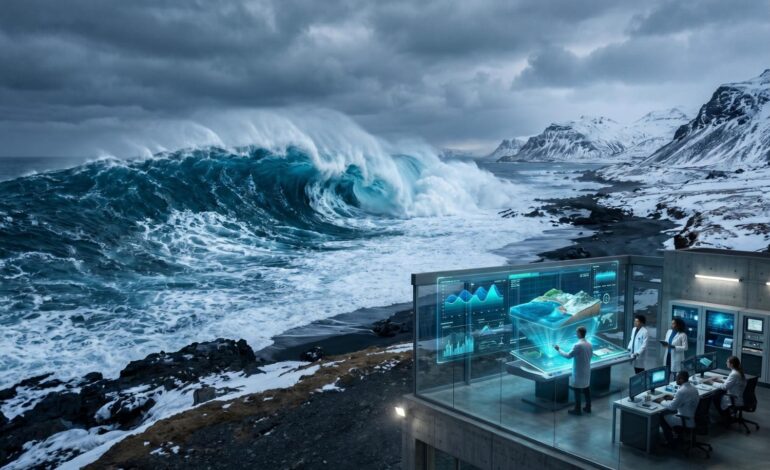

When scientists talk about the ocean’s most destructive forces, few phenomena compare to an alaska tsunami. These massive waves are not just natural disasters—they are complex geological events shaped by underwater earthquakes, shifting tectonic plates, and deep-sea pressure changes.
Recent advances in oceanography and seismic technology have allowed researchers to study tsunami behavior in ways that were impossible just a decade ago. By recreating wave patterns in labs and digital simulations, scientists are now uncovering how Alaska’s unique geography makes it one of the most tsunami-prone regions in the world.
This article explores how modern science is decoding tsunami formation, improving prediction systems, and simulating nature’s most powerful waves with unprecedented accuracy.
What Makes an Alaska Tsunami So Dangerous?
An alaska tsunami typically originates from powerful undersea earthquakes along the Aleutian Trench, where the Pacific Plate subducts beneath the North American Plate. This region is one of the most active seismic zones on Earth.
Several factors increase the danger:
- Rapid vertical displacement of the seafloor
- Deep ocean trenches that amplify wave energy
- Proximity to coastal communities in Alaska and the Pacific Rim
- Limited evacuation time after detection
Unlike normal ocean waves, tsunamis move through the entire water column, not just the surface. This makes them capable of traveling across entire oceans at jetliner speeds.
How Scientists Study Tsunami Formation Today
Modern researchers no longer rely only on historical records. Instead, they use advanced tools to recreate and analyze tsunami behavior in controlled environments.
1. Seismic Data Mapping
Using underwater sensors, scientists track tectonic movement in real time. These sensors help identify earthquake triggers that may lead to an alaska tsunami.
2. Deep Ocean Pressure Sensors
Placed on the ocean floor, these instruments detect sudden changes in water pressure, signaling tsunami formation within minutes.
3. Computer-Based Simulation Models
Supercomputers now simulate tsunami propagation across entire ocean basins. These models help predict:
- Wave height
- Speed of travel
- Coastal impact zones
4. Laboratory Wave Tanks
Scaled-down tsunami waves are recreated in controlled environments to study their interaction with coastal landscapes.
The Role of Tsunami Research in Alaska
Alaska is one of the most important natural laboratories for tsunami science. Researchers focus heavily on the region because it has experienced some of the most powerful seismic events in recorded history.
Key research areas include:
- Subduction zone behavior
- Coastal erosion patterns
- Early warning system development
- Tsunami wave amplification in fjords
Scientists studying tsunami research alaska are particularly interested in how underwater landslides contribute to wave formation, even without major earthquakes.
How Earthquakes Trigger an Alaska Tsunami
Most tsunamis begin with a sudden earthquake beneath the ocean floor. When tectonic plates shift vertically, they displace massive amounts of water, creating waves that spread outward.
The process involves:
- Sudden seabed rupture
- Vertical water displacement
- Wave formation in deep ocean
- Energy amplification near coastlines
In Alaska’s case, the steep underwater topography intensifies wave energy, making local tsunamis especially destructive.
Advances in Tsunami Warning Systems
One of the biggest breakthroughs in modern science is the development of early warning systems. These systems aim to detect an alaska tsunami within minutes of its formation.
Key Components of Warning Systems:
- Seismic monitoring stations
- Deep ocean buoys (DART systems)
- Satellite communication networks
- Automated alert systems for coastal regions
These technologies work together to provide real-time alerts, giving communities precious time to evacuate.
Tsunami Simulation Technology: Recreating Nature’s Fury
One of the most fascinating developments in ocean science is the ability to digitally recreate tsunami waves.
Using physics-based models, researchers simulate:
- Wave speed across varying depths
- Coastal impact behavior
- Flood penetration inland
- Energy dissipation patterns
These simulations help governments design better coastal defenses and evacuation strategies.
Modern simulation studies of tsunami simulation modeling have significantly improved disaster preparedness across the Pacific region.
Why Alaska Is Central to Global Tsunami Studies
Alaska’s geological setting makes it a critical focus for global tsunami research:
- It lies on the Pacific “Ring of Fire”
- It has frequent high-magnitude earthquakes
- Its coastline includes complex fjords and islands
- It connects to major trans-Pacific wave pathways
Because of these factors, an alaska tsunami can potentially affect not only local communities but also distant countries across the Pacific Ocean.
Climate Change and Future Tsunami Risks
While tsunamis are primarily caused by tectonic activity, climate change may indirectly increase risks:
- Rising sea levels increase coastal vulnerability
- Melting glaciers may trigger underwater landslides
- Changing ocean conditions affect wave dispersion
Researchers are now combining climate models with seismic data to better understand future risks.
How Science Is Recreating Nature’s Most Powerful Waves
The most groundbreaking aspect of modern research is the ability to recreate tsunami behavior with extreme precision. Scientists can now:
- Rebuild past tsunami events digitally
- Predict future wave behavior under different scenarios
- Test coastal defense systems in simulations
- Analyze how terrain changes wave intensity
This scientific progress is transforming disaster preparedness from reactive response to proactive prevention.
Importance of Public Awareness and Education
Even with advanced technology, human awareness remains essential. Communities in tsunami-prone regions like Alaska must understand:
- Early warning signals
- Evacuation routes
- Emergency preparedness plans
- Safe coastal behavior
Education significantly reduces casualties during real events.
Conclusion: The Future of Tsunami Science
The study of alaska tsunami events has entered a new era. With advanced sensors, AI-powered simulations, and global monitoring systems, scientists are closer than ever to predicting and understanding these devastating natural phenomena.
While we cannot prevent earthquakes or tsunamis, we can now study them with remarkable precision—and that knowledge is saving lives.