Belt Guard Robot: The Future of Industrial Safety Technology
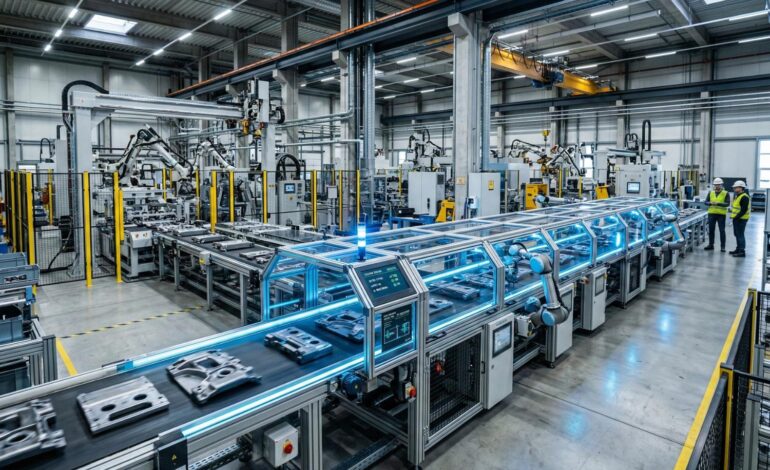

Industrial workplaces are built on motion. Conveyor belts move raw materials, packaging lines run at high speed, and automated systems operate around the clock. But behind this efficiency lies one persistent risk: machinery accidents. According to global workplace safety reports, thousands of injuries each year are linked to moving mechanical parts—many of them involving conveyor belts.
Enter the belt guard robot — an emerging innovation designed to transform industrial safety. More than just a protective cover or mechanical barrier, this intelligent robotic system monitors, guards, and prevents accidents around belt-driven equipment in real time.
In a world increasingly driven by automation and smart technology, the belt guard robot represents a major leap forward in how factories protect workers while maintaining productivity.
Why Industrial Safety Technology Matters More Than Ever
Industrial growth has accelerated rapidly over the past decade. With global manufacturing output reaching trillions of dollars annually, facilities are pushing for higher speed and efficiency. However, as production speeds increase, so does operational risk.
Conveyor belts are among the most commonly used pieces of industrial equipment. They operate in:
- Manufacturing plants
- Mining operations
- Warehouses and logistics hubs
- Food processing facilities
- Automotive assembly lines
Traditional belt guards are static physical barriers. While effective to a degree, they do not detect human presence or respond dynamically to hazards. When maintenance is required, workers must often disable safety systems, temporarily increasing risk.
That’s where the belt guard robot changes the equation.
What Is a Belt Guard Robot?
A belt guard robot is a smart robotic safety system integrated into conveyor belt infrastructure. Unlike conventional guards, it combines:
- AI-powered sensors
- Motion detection systems
- Real-time monitoring
- Automated emergency shutdown capabilities
- Predictive maintenance analytics
Instead of acting as a passive shield, it actively monitors its environment and intervenes when necessary.
Key Components
| Component | Function |
|---|---|
| Proximity Sensors | Detect human presence near moving belts |
| AI Monitoring System | Analyzes movement patterns |
| Auto-Shutdown Mechanism | Stops machinery instantly in danger scenarios |
| Diagnostic Module | Identifies belt wear or mechanical faults |
| Alert System | Sends real-time warnings to supervisors |
This integrated system transforms conveyor belts from potential hazards into controlled, intelligent machinery.
How Belt Guard Robots Improve Workplace Safety
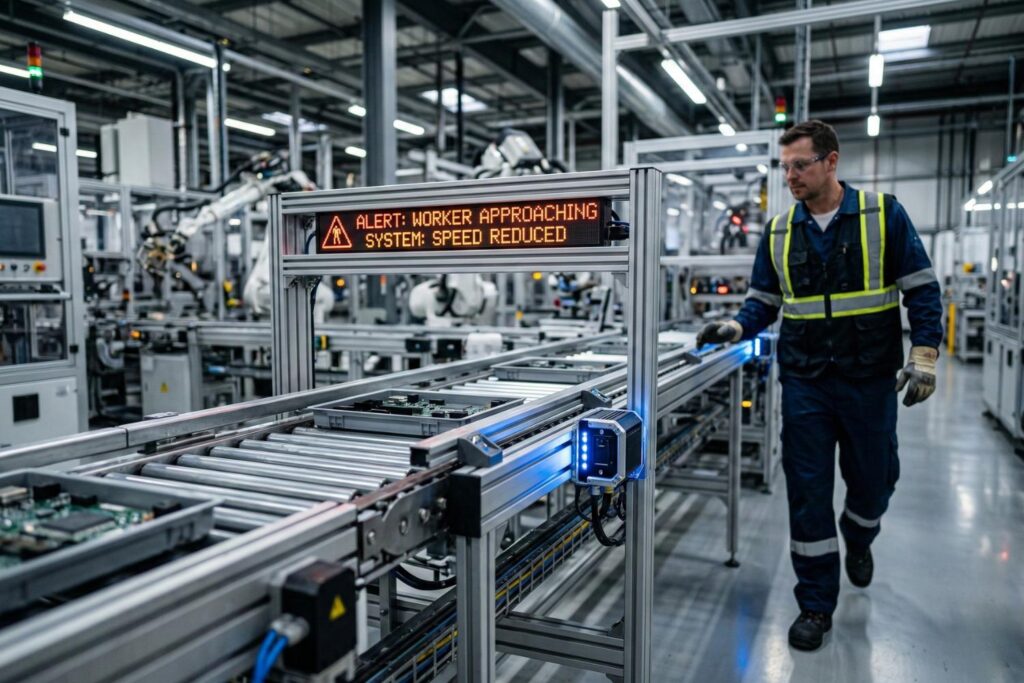
1. Real-Time Hazard Detection
Traditional safety systems react after contact or obstruction. A belt guard robot detects risks before physical interaction occurs.
For example, if a worker accidentally steps into a restricted zone, the system can automatically:
- Trigger a warning alarm
- Slow down belt speed
- Initiate a full emergency stop
This proactive response significantly reduces accident rates.
2. Reduced Human Error
Human error remains one of the leading causes of industrial accidents. Fatigue, distractions, and oversight can lead to catastrophic outcomes.
The belt guard robot minimizes reliance on manual safety checks by:
- Continuously scanning equipment
- Logging unusual belt vibrations
- Flagging abnormal heat levels
- Identifying misalignments early
Instead of reacting to breakdowns, companies can prevent them.
3. Predictive Maintenance and Downtime Reduction
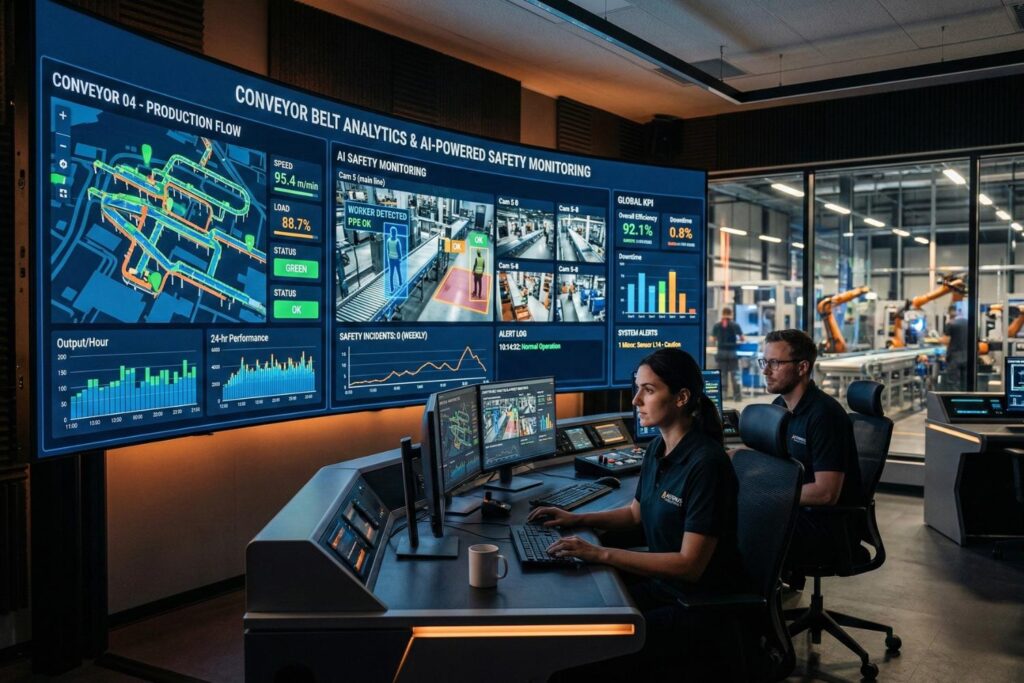
Unexpected downtime costs industries billions each year. In large manufacturing plants, even one hour of downtime can cost tens of thousands of dollars.
Belt guard robots collect operational data and detect early warning signs of:
- Belt fraying
- Motor overheating
- Structural stress
- Debris buildup
By predicting issues before failure, companies can schedule maintenance efficiently—saving both time and money.
Economic Impact: Safety as a Business Strategy
Industrial safety is no longer just a compliance requirement—it’s a competitive advantage.
Cost Comparison: Traditional Guard vs Belt Guard Robot
| Factor | Traditional Guard | Belt Guard Robot |
|---|---|---|
| Initial Cost | Low | Moderate to High |
| Monitoring | Manual | Automated & AI-driven |
| Downtime Risk | Higher | Reduced |
| Injury Prevention | Limited | Proactive |
| Data Collection | None | Real-time analytics |
Although the initial investment is higher, long-term ROI often outweighs the cost. Businesses benefit from:
- Fewer compensation claims
- Lower insurance premiums
- Increased productivity
- Enhanced regulatory compliance
For readers interested in the business implications of automation, this topic could link internally to a related article like “How AI Is Reshaping Global Manufacturing Economics.”
Technology Behind the Belt Guard Robot
Artificial Intelligence & Machine Learning
AI enables the robot to learn normal belt operation patterns. When unusual behavior occurs—such as irregular vibrations—it flags the issue instantly.
Machine learning algorithms improve detection accuracy over time, reducing false alarms.
IoT Integration
Belt guard robots are often connected to industrial IoT networks. This allows:
- Remote monitoring from control rooms
- Cloud-based analytics
- Mobile alerts for supervisors
- Integration with smart factory dashboards
In the era of Industry 4.0, this connectivity is crucial.
Robotics and Automation Engineering
Modern robotics allows the system to physically adjust guards or reposition itself in some advanced models. Instead of a fixed guard, the robot can:
- Extend protective panels
- Deploy emergency shields
- Lock mechanisms automatically
Industry Applications
Manufacturing
In automotive and heavy machinery plants, high-speed conveyor belts carry heavy parts. Even a small error can cause serious injuries. Belt guard robots reduce these risks dramatically.
Mining
Mining conveyor systems often operate in hazardous environments with dust and vibration. Intelligent robotic guards can monitor structural stress and prevent mechanical failures.
Food Processing
Hygiene and safety are critical. Robotic guards not only prevent injuries but also detect contamination risks caused by belt wear.
Logistics & Warehousing
With the rapid growth of e-commerce, warehouses rely heavily on conveyor systems. As automation expands, safety must keep pace.
For technology enthusiasts, this section could link internally to related content such as “The Rise of Smart Warehouses in the Digital Age.”
Regulatory Compliance and Global Standards
Governments worldwide are tightening workplace safety regulations. Organizations must comply with safety standards to avoid penalties.
A belt guard robot helps companies meet safety benchmarks by:
- Maintaining digital safety logs
- Generating automated compliance reports
- Providing incident tracking documentation
This digital documentation strengthens corporate accountability.
Challenges and Considerations
While promising, belt guard robots are not without challenges.
High Upfront Costs
Smaller companies may hesitate due to budget limitations.
Integration Complexity
Existing factories may require retrofitting to accommodate robotic systems.
Workforce Adaptation
Employees need training to interact with AI-driven safety tools effectively.
However, as technology adoption increases, costs are expected to decline.
The Future of Belt Guard Robots
The future looks even more advanced. Emerging developments may include:
- Computer vision cameras for enhanced detection
- 3D mapping of industrial zones
- Autonomous maintenance drones
- Blockchain-based safety reporting
As smart factories evolve, belt guard robots could become a standard requirement rather than a luxury investment.
Industry analysts predict that the global industrial safety technology market will grow significantly over the next decade, driven by automation and stricter regulations.
Why General Readers Should Care
Even if you’re not working in manufacturing, industrial safety affects you indirectly. Safer factories mean:
- More stable supply chains
- Lower product costs
- Ethical production practices
- Reduced environmental risk
From a business perspective, companies that invest in safety technologies often gain stronger investor confidence.
From a technology standpoint, belt guard robots represent how AI is moving beyond digital platforms into physical safety systems.
Frequently Asked Questions (FAQ)
1. What makes a belt guard robot different from a traditional belt guard?
A traditional guard is a static physical barrier, while a belt guard robot uses sensors, AI, and automated responses to actively monitor and prevent hazards.
2. Are belt guard robots suitable for small businesses?
While initial costs can be high, smaller facilities with heavy conveyor usage may benefit from reduced accident risks and downtime savings.
3. Do belt guard robots replace human safety officers?
No. They complement safety teams by providing continuous monitoring and real-time alerts.
4. How long does installation typically take?
Installation time depends on facility size and infrastructure compatibility. It can range from a few days to several weeks.
5. Are these robots customizable?
Yes. Many systems can be tailored to specific belt sizes, speeds, and operational requirements.
Conclusion
Industrial safety is evolving. What once relied solely on physical barriers and manual oversight is now entering the age of intelligent automation. The belt guard robot is more than a technological upgrade—it is a shift in mindset.
By combining AI, robotics, and predictive analytics, this innovation enhances worker safety, reduces downtime, and strengthens business resilience. As industries continue to automate, smart safety systems like belt guard robots are likely to become the new standard.
For businesses aiming to stay competitive in the age of Industry 4.0, investing in intelligent safety technology is not just responsible—it’s strategic.