BTC Crash Explained: Real Reasons Behind Bitcoin’s Sudden Price Drop and What Investors Should Do Next
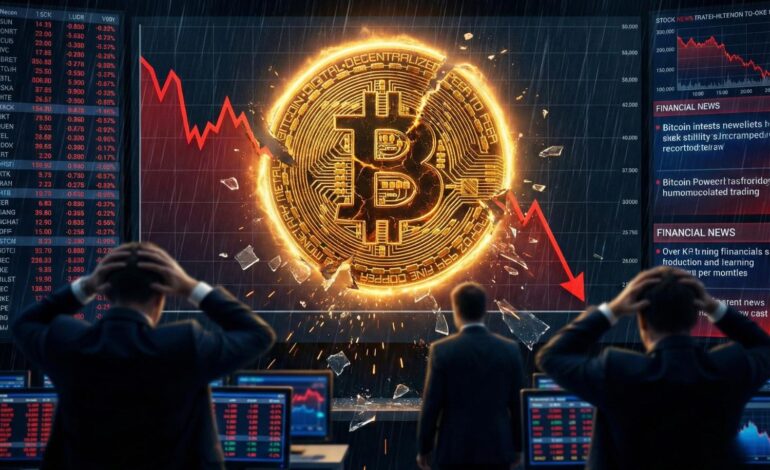

Bitcoin has long been known for its volatility, but every major downturn still manages to shock the market. The recent btc crash wiped billions off the crypto market within days, leaving investors confused, anxious, and desperate for clarity. Was this crash inevitable? Is it the end of Bitcoin’s bull cycle—or just another correction?
In this in-depth analysis, we break down the real reasons behind the btc crash, separate fear from facts, and explain what smart investors should do next. Whether you’re holding Bitcoin, planning to buy the dip, or considering an exit, understanding this crash is critical.
What Is the BTC Crash and Why Did It Happen So Suddenly?
A btc crash refers to a rapid and sharp decline in Bitcoin’s price over a short period. Unlike slow market corrections, crashes are fueled by panic, forced liquidations, and sudden shifts in sentiment.
Bitcoin didn’t fall for just one reason. Instead, it was hit by multiple pressure points at the same time, creating a perfect storm that pushed prices down aggressively.
Key characteristics of the recent btc crash:
- Sudden double-digit percentage drop
- Massive long position liquidations
- Fear-driven selling across retail investors
- Spillover impact on altcoins and the broader crypto market
Understanding why this happened requires looking beyond headlines.
Macroeconomic Pressure: The Silent Killer Behind the BTC Crash
One of the biggest drivers of the btc crash lies outside the crypto market itself.
High Interest Rates and Tight Monetary Policy
When central banks keep interest rates high, investors move money away from risky assets like Bitcoin and into safer instruments such as bonds and cash equivalents.
Bitcoin thrives in:
- Low interest rate environments
- Easy liquidity
- Risk-on investor sentiment
The opposite conditions create selling pressure—and that’s exactly what the market faced.
Inflation and Global Uncertainty
Persistent inflation, geopolitical tensions, and slowing economic growth reduce investor appetite for speculative assets. In times of uncertainty, Bitcoin often behaves less like “digital gold” and more like a high-risk tech asset.
This macro pressure set the stage for the btc crash long before prices actually fell.
Institutional Selling and Whale Movements
Contrary to popular belief, retail investors are not the main drivers of major crashes. Large institutions and Bitcoin whales play a far bigger role.
Why Whales Trigger BTC Crashes
- They hold massive BTC reserves
- Their sell orders impact liquidity
- Their actions influence market psychology
When whales start distributing Bitcoin:
- Prices weaken
- Support levels break
- Panic selling accelerates
On-chain data around the btc crash showed large wallet outflows to exchanges, a classic signal of impending sell pressure.
Leverage, Liquidations, and the Domino Effect

One of the most underestimated causes of every btc crash is excessive leverage.
How Leverage Amplifies Crashes
When traders use borrowed money to open long positions:
- Small price drops trigger margin calls
- Positions are forcefully liquidated
- Automatic selling pushes prices lower
This creates a self-reinforcing crash cycle:
- Price drops slightly
- Liquidations occur
- Selling pressure increases
- Price drops further
During the recent btc crash, billions worth of leveraged positions were wiped out within hours.
Regulatory Fear and Market Sentiment
Regulation doesn’t need to change for fear to spread—sometimes rumors are enough.
Regulatory Uncertainty Matters
- Possible restrictions on exchanges
- Concerns over ETF approvals or rejections
- Government crackdowns in major economies
Even the hint of regulatory tightening can trigger:
- Institutional caution
- Retail panic
- Rapid sell-offs
Fear spreads faster than facts, and during the btc crash, sentiment flipped from optimism to extreme fear almost overnight.
Technical Breakdown: When Charts Turn Bearish
Technical traders play a massive role in Bitcoin price movements.
Key Technical Failures That Fueled the BTC Crash
- Loss of major support levels
- Breakdown below moving averages
- Bearish volume confirmation
- Failed price recoveries
Once Bitcoin broke critical support zones, algorithmic trading systems automatically sold, accelerating the crash.
Technical analysis doesn’t cause crashes—but it magnifies them when levels fail.
Media Hype and Social Media Panic
Crypto markets are highly emotional, and media narratives can intensify volatility.
Headlines like:
- “Bitcoin Bubble Bursts”
- “Crypto Market in Freefall”
- “Is Bitcoin Dead Again?”
These narratives:
- Trigger emotional selling
- Discourage new buyers
- Reinforce bearish momentum
Social media platforms amplify fear, turning normal corrections into full-scale btc crash events.
Is This BTC Crash Different From Previous Ones?
No—and yes.
Similarities to Past Crashes
- Sharp drops
- Overleveraged market
- Fear-driven selling
- Media pessimism
What’s Different This Time
- Stronger institutional presence
- Better infrastructure
- Broader global adoption
- Long-term holders accumulating quietly
Historically, every major btc crash has been followed by recovery, though timing varies.
What Smart Investors Should Do Next

A btc crash is not just a risk—it’s also an opportunity if handled correctly.
1. Don’t Panic Sell
Panic selling locks in losses. Emotional decisions almost always outperform logic—in the wrong direction.
2. Reassess Your Risk Management
Ask yourself:
- Did I overinvest?
- Was I using leverage?
- Can I emotionally handle volatility?
Crashes expose weak strategies.
3. Dollar-Cost Averaging (DCA)
Many experienced investors use btc crashes to:
- Accumulate gradually
- Reduce emotional stress
- Improve long-term entry prices
4. Avoid Overtrading
Trying to “catch the bottom” often leads to:
- More losses
- Poor timing
- Increased stress
Patience beats prediction.
5. Focus on Long-Term Fundamentals
Despite crashes, Bitcoin still offers:
- Fixed supply
- Decentralization
- Global liquidity
- Institutional interest
Short-term price action doesn’t change long-term fundamentals.
Should New Investors Buy During a BTC Crash?
This depends entirely on time horizon and risk tolerance.
Good reasons to buy:
- Long-term belief in Bitcoin
- Willingness to hold through volatility
- Use of capital you can afford to lock away
Bad reasons to buy:
- Fear of missing out
- Expecting quick recovery
- Using borrowed funds
A btc crash rewards discipline—not desperation.
What the BTC Crash Teaches the Crypto Market
Every crash leaves lessons behind:
- Leverage is dangerous
- Emotions destroy portfolios
- Bitcoin cycles are inevitable
- Education beats hype
Investors who survive crashes often emerge smarter, stronger, and more disciplined.
Final Thoughts: Is the BTC Crash a Threat or an Opportunity?
The btc crash feels brutal in the moment—but history shows that Bitcoin has survived every crash it has ever faced.
What separates winners from losers is not prediction—it’s behavior.
If you:
- Stay informed
- Manage risk
- Avoid emotional decisions
Then crashes become stepping stones, not roadblocks.
Bitcoin’s journey has never been smooth—and that volatility is exactly why it continues to attract believers, builders, and long-term investors worldwide.