


Imagine waking up in 2026 to a home that already knows your schedule. The curtains gently open as sunlight filters in. Your coffee machine starts brewing at your preferred strength. The thermostat adjusts automatically based on the weather forecast. Your car warms up before you leave for work. You didn’t press a single button.
This isn’t science fiction. It’s the direction we’re heading—and faster than most people realize.
As connected devices become more intelligent and affordable, many are asking the same question: how smart home technology will change lives in the coming years? The answer goes far beyond convenience. It touches safety, health, business productivity, energy consumption, and even celebrity lifestyles.
Let’s explore what 2026 and beyond will really look like.
The Rise of Smart Homes: Why This Matters Now
The smart home industry has moved from novelty to necessity. According to recent industry projections, the global smart home market is expected to exceed $200 billion by 2026, driven by increased adoption of IoT devices, AI assistants, and energy-efficient systems.
But this isn’t just about gadgets. It’s about lifestyle transformation.
What’s Driving the Growth?
- Affordable IoT devices
- Faster internet (5G and fiber expansion)
- AI-powered voice assistants
- Rising energy costs
- Remote work becoming permanent for many industries
For audiences interested in business trends, this shift represents one of the biggest consumer tech revolutions since smartphones. For sports fans and celebrities, it means high-performance living spaces designed for productivity and privacy.
A Look at Today vs. 2026 Smart Homes
Here’s a quick comparison to understand how rapidly things are evolving:
| Feature | Typical Smart Home (2023) | Smart Home (2026 & Beyond) |
|---|---|---|
| Voice Control | Basic commands | Context-aware conversations |
| Security | Camera alerts | Predictive threat detection |
| Energy Use | Scheduled automation | AI-optimized real-time energy balancing |
| Health Monitoring | Wearables | Integrated home health analytics |
| Appliance Control | Manual app-based | Fully autonomous adaptation |
The biggest difference? Intelligence.
AI Will Make Homes Predictive, Not Reactive

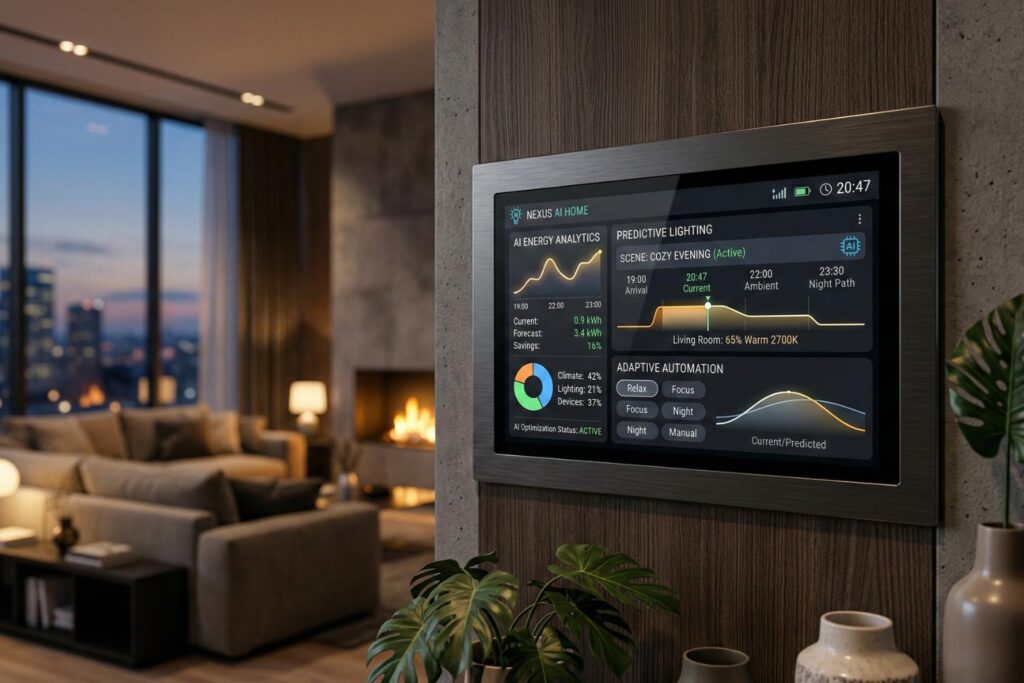
In 2026, your home won’t just respond to commands—it will anticipate them.
Artificial intelligence systems will analyze:
- Your sleep patterns
- Work schedules
- Energy usage habits
- Grocery consumption
- Health indicators
Instead of turning lights on because you said so, your home will adjust lighting based on your mood, the time of day, and your productivity needs.
Real-Life Example
A business professional working from home may have:
- Automatic “focus mode” lighting during work hours
- Noise cancellation via smart windows
- Air quality adjustment for peak cognitive performance
For athletes, recovery rooms may automatically adjust temperature and humidity levels to optimize muscle recovery.
This is how smart home technology will change lives—not just by saving time, but by improving performance.
Energy Efficiency Will Become a Financial Strategy
Energy prices continue to fluctuate globally. Smart homes in 2026 will act like financial managers.
AI-driven energy systems will:
- Shift appliance use to off-peak hours
- Store solar energy efficiently
- Monitor real-time consumption
- Suggest cost-saving behaviors
Smart grids will connect homes to larger energy networks, allowing homeowners to sell excess solar power back to the grid.
Why This Matters for Business and Investors
Energy-efficient homes increase property value. Real estate markets are already reflecting this trend.
If your blog also covers business insights, this would be an excellent place to internally link to an article about:
“The Business of Green Technology in 2026”
The intersection of tech and sustainability will become one of the most lucrative sectors in the next decade.
Security Will Move From Monitoring to Prevention
Today’s smart cameras notify you after something happens. Tomorrow’s systems will prevent it.
Advanced AI-powered security systems will:
- Detect unusual behavioral patterns
- Identify unknown individuals instantly
- Lock down specific areas automatically
- Alert authorities before a break-in escalates
Facial recognition, license plate tracking, and predictive threat modeling will become mainstream.
For celebrities and public figures, this offers enhanced privacy and controlled access without visible security personnel.
However, this raises concerns about data privacy—an issue we’ll address shortly.
Health Monitoring Inside the Home

Perhaps the most underrated transformation is in health.
In 2026 and beyond, smart homes will integrate:
- Air quality sensors
- Sleep monitoring systems
- Heart rate tracking via smart mattresses
- Fall detection for elderly residents
Homes may alert family members if an elderly parent hasn’t moved for an unusual amount of time.
For athletes and fitness enthusiasts, recovery and performance optimization will move beyond wearables into the environment itself.
Imagine a recovery-focused smart bedroom that:
- Adjusts oxygen levels
- Changes lighting based on circadian rhythms
- Controls white noise for deeper sleep
The home becomes a wellness assistant.
If your website includes lifestyle content, this would be a strategic point to link internally to:
“The Future of Sports Recovery Technology”
Smart Kitchens and Grocery Automation
By 2026, your refrigerator won’t just keep food cold—it will track inventory.
Smart kitchens will:
- Suggest recipes based on available ingredients
- Automatically reorder groceries
- Track expiration dates
- Provide nutritional breakdowns
For busy entrepreneurs or public figures constantly traveling, this eliminates daily planning stress.
Over time, AI-driven dietary systems may recommend meals aligned with your fitness or health goals.
Remote Work Will Feel Truly Seamless
Remote work changed the global workforce. Smart homes will perfect it.
Future smart offices will feature:
- Soundproof automation
- Smart lighting calibrated for video calls
- Auto-scheduling room settings
- Real-time bandwidth management
Instead of manually adjusting Zoom lighting, your home will detect when a meeting starts and optimize the environment automatically.
This directly impacts productivity—an area business readers will appreciate.
The Role of 5G and Edge Computing
Behind all these advancements lies infrastructure.
Faster networks mean:
- Instant device communication
- Minimal latency
- Real-time AI processing
Edge computing will allow devices to process data locally instead of relying entirely on cloud servers. This improves speed and privacy.
As infrastructure improves globally, smart home adoption will expand beyond luxury markets into middle-income households.
Privacy Concerns: The Double-Edged Sword
With greater intelligence comes greater responsibility.
Smart homes collect massive data:
- Voice recordings
- Behavior patterns
- Biometric signals
- Location tracking
If misused, this information can compromise privacy.
The future will require:
- Stronger encryption standards
- Transparent data policies
- Localized processing systems
- User-controlled data permissions
Governments and tech companies will face pressure to balance innovation with protection.
Trust will determine adoption.
Economic and Social Impact
Smart home technology will reshape:
- Real estate pricing
- Construction standards
- Insurance models
- Energy infrastructure
Homes without smart integration may lose market value in premium areas.
Insurance companies may offer discounts for AI-driven security systems.
Construction firms will design homes with embedded IoT infrastructure from day one.
The ripple effect will extend into jobs, manufacturing, and digital services.
What This Means for Everyday People
Let’s simplify it.
In practical terms, here’s how smart home technology will change lives:
- Time saved daily through automation
- Lower energy bills via AI optimization
- Improved health outcomes through monitoring
- Better security with predictive systems
- Enhanced productivity for remote workers
The change will feel gradual—but the long-term transformation will be dramatic.
Who Benefits the Most?
- Busy professionals
- Families with children
- Elderly residents
- Athletes and fitness enthusiasts
- High-profile individuals
But as prices fall, accessibility will expand.
Future Outlook Beyond 2026
Looking further ahead:
- Homes may integrate emotional AI
- Robot assistants could become common
- Smart walls may change color and texture
- AI may negotiate service contracts automatically
The home will evolve from a static building into a dynamic digital ecosystem.
FAQs
1. Will smart home technology become affordable for everyone?
Yes. As manufacturing scales and competition increases, prices are steadily declining. By 2026, many core features will be mainstream rather than luxury.
2. Is smart home technology secure?
Security is improving with AI and encryption, but users must choose reputable brands and maintain software updates.
3. Can smart homes reduce energy bills?
Absolutely. AI-driven energy management systems can significantly lower electricity costs by optimizing usage patterns.
4. Will smart homes replace human decision-making?
No. They assist and automate repetitive tasks but still rely on user preferences and control.
5. Is installation complicated?
Modern systems are becoming more plug-and-play, and professional integration services are expanding globally.
Conclusion
Smart home technology is no longer about turning lights on with your voice. It’s about intelligence, efficiency, safety, and performance.
From energy savings and enhanced security to health optimization and productivity, the way we live is evolving rapidly. By 2026 and beyond, homes will become proactive partners in our daily lives.
Understanding how smart home technology will change lives isn’t just about tech enthusiasm—it’s about recognizing one of the most powerful lifestyle transformations of our generation.
The smart home revolution is already here. The question is: are we ready for it?


