


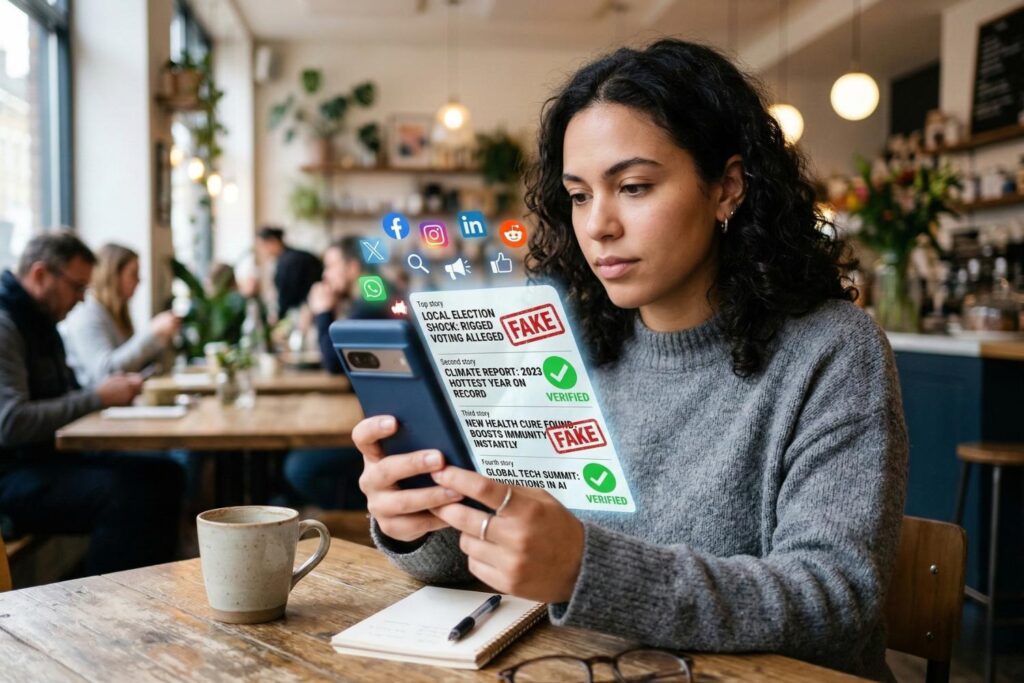
Every day, we scroll through social media, click on headlines, or read articles thinking they’re real — but not all information online is true. Today’s digital world makes it easy for anyone to publish anything, and misinformation spreads faster than ever.
Whether it’s a shocking headline meant to go viral, an edited image, or a rumor dressed up as fact, fake news affects how we think, how we vote, and how we make decisions. That’s why learning how to identify fake news is a vital skill for every reader.
In this guide, you’ll learn:
- What fake news is
- Why it spreads
- Practical steps to spot it
- Tools and habits to protect yourself
By the end, you’ll feel confident navigating the online world without falling for misinformation.
1. How To Identify Fake News?
Fake news is misinformation presented as factual news. It could appear as:
- A made‑up story
- Misleading headlines
- Photos or videos taken out of context
- Manipulated evidence
Unlike satire (which is meant to be funny), fake news aims to deceive — whether for clicks, influence, or profit.
Fake news isn’t just “wrong facts.” It looks real and believable, which is why many people struggle to tell the difference.
2. Why Fake News Spreads So Easily
Fake news spreads faster online than ever before. Why?
📌 1. Social Media Algorithms
Platforms like Facebook and Twitter prioritize engagement. Controversial or emotional posts tend to get more likes and shares — even if they’re false.
📌 2. Confirmation Bias
We tend to believe information that matches our existing views. That makes it easy to accept misinformation without questioning it.
📌 3. Lack of Media Literacy
Not all readers know how to evaluate sources or check facts. So misinformation slips through unnoticed.
3. 10 Practical Ways to Spot Fake News
Here’s the heart of the guide: simple steps you can use today to tell real information from fake.
1. Check the Source
Always ask: Where is this information coming from?
Reliable news outlets usually have:
✅ A clear editorial team
✅ Contact information
✅ A reputation you can verify
If the source is unfamiliar or suspicious, pause before trusting it.
👉 Ask yourself:
- Does the website look professional?
- Is it a known news outlet?
- Does it have spelling/grammar errors?
If not, be cautious.
2. Read Beyond the Headline
Many people share articles based only on the headline. But headlines can be misleading.
Headlines are designed to grab attention — but they don’t always reflect the full story.
Before reacting, open the article and read the full text.
3. Look for Supporting Evidence
Real stories provide:
📍 Quotes from credible sources
📍 Links to studies, interviews, or documents
📍 Names of journalists or researchers
If an article makes bold claims without evidence, that’s a red flag.
4. Check the Date
Old posts can appear new. Sometimes misleading stories recirculate to appear current.
Before reacting, check the publish date to make sure the content is recent and relevant.
5. Evaluate the Language
Fake news often uses:
❌ Emotional or dramatic language
❌ All caps headlines
❌ Exaggerated claims (e.g., “Shocking!”, “You won’t believe it!”)
Clear, factual reporting doesn’t rely on sensational wording.
6. Verify with Credible Outlets
See if other reliable news sources are reporting the same story.
If reputable outlets haven’t covered it, the information might be false or unverified.
7. Use Fact‑Checking Websites
There are independent organizations dedicated to busting misinformation. Examples include:
✔ Snopes
✔ FactCheck.org
✔ PolitiFact
These websites examine claims and explain what’s true and what’s not.
8. Double‑Check Photos and Videos
Images and clips can be manipulated or repurposed.
You can use reverse image search to see where an image originally came from.
If an old photo is being shared as something new, that’s a sign of fake news.
9. Be Wary of Anonymous Sources
Anonymous accounts are often used to spread false information.
If a claim doesn’t cite a real person, expert, or official source, question its accuracy.
10. Pause Before You Share
This might be the most important step.
Before you repost, comment, or forward anything, ask:
“Is this true? Did I verify it?”
Sharing before checking contributes to the spread of misinformation.
4. Common Types of Fake News to Watch Out For
Fake news doesn’t come in only one form. Here are common types:
🔹 Clickbait Headlines
Designed to make you click — even if the content is weak or fabricated.
🔹 Satire Misinterpreted As Real
Sites like The Onion are jokes, but sometimes people share their articles thinking they’re factual.
🔹 Deepfakes
AI‑generated videos or audio that mimic real people saying things they never said.
🔹 Sponsored Content Masquerading as News
Ads that look like articles but are actually promotions.
🔹 Rumors and Speculation
Unverified claims spread as fact.
Recognizing these types helps you apply the right filter when you see them.
5. The Real Harm of Fake News
Fake news isn’t harmless — it impacts:
🤯 People’s Opinions and Beliefs
People form opinions based on what they read — and false information changes how we think.
🗳 Political Decisions
Misinformation influences elections, public policy, and civic understanding.
🧠 Trust in Institutions
When people learn they’ve been misled, they lose trust — even in credible sources.
😟 Mental Well‑Being
Constant exposure to misleading content can cause anxiety and confusion.
Understanding the harm motivates us to be more careful and responsible.
6. Tools to Help You Spot Fake News
Here are some tools and browser extensions that assist readers:
🛠 Reverse Image Search (Google, TinEye)
Check the origin of photos.
🛠 Browser Extensions
Extensions can flag unreliable sources or fact‑check content automatically.
🛠 News Literacy Courses
Many free online courses teach how to analyze sources and recognize bias.
Learning these tools makes your news reading sharper and smarter.
7. Building Habits to Stay Informed
Spotting fake news isn’t a one‑time trick — it’s a mindset.
Here are habits to develop:
➡ Read from multiple sources
➡ Question emotional headlines
➡ Verify before sharing
➡ Follow credible journalists
➡ Take a pause before reacting
Over time, these habits turn into instinct.
8. How to Talk to Others Who Believe Fake News
You might encounter friends or family who share misinformation. How do you handle it?
💬 Stay Calm
Avoid getting angry — hostility makes people defensive.
💬 Ask Questions
“Where did you see this?”
“How did you verify it?”
Questions invite thinking, not confrontation.
💬 Share Facts Respectfully
Provide credible links and explain why the information is questionable.
Even a gentle conversation can make a difference.
9. Case Studies: Real Examples of Fake News
(Here, you can include 2–3 real brief examples — I’ll write two short ones)
Case Study 1: Misused Old Image
A photo from a past event was shared during a news incident online with a false claim. Reverse image search showed the true source and date.
Case Study 2: False Health Claim
A social post claimed a “miracle cure” with no scientific backing. Fact‑checking sites debunked it and explained the real science.
Both examples show how easily misinformation spreads — and how simple checks can expose the truth.
10. Final Thoughts — Empowering You as a Reader
In today’s world, information is everywhere. The power belongs to the reader who remains curious, cautious, and informed.
By learning how to identify fake news, you’re not just protecting yourself — you’re protecting your community and contributing to a more truthful online space.
Remember:
📌 Truth matters
📌 Verification is a skill
📌 Skepticism isn’t negativity — it’s protection
Be an informed reader. Share information responsibly. And always question before you click.


