IV Sedation vs General Anesthesia: What Patients Must Know Before Surgery


When facing surgery—whether it’s a routine dental procedure or a more complex operation—one of the most important decisions you’ll encounter isn’t just about the procedure itself. It’s about how you’ll experience it. The choice between IV sedation and general anesthesia can shape everything from your comfort level to your recovery time.
For many patients, the terms sound technical, even intimidating. But understanding the difference between iv sedation vs general anesthesia is not just helpful—it’s essential. It empowers you to ask the right questions, make informed decisions, and approach your procedure with confidence instead of fear.
Let’s break it all down in a clear, human way.
Why This Topic Matters More Than You Think
Anesthesia isn’t just about “going to sleep.” It’s a carefully controlled medical process that directly affects your safety, pain management, and recovery.
Globally, millions of procedures are performed each year using either IV sedation or general anesthesia. According to medical research, the type of anesthesia used can significantly impact:
- Recovery time
- Risk of complications
- Patient comfort and anxiety levels
- Overall surgical outcome
Yet many patients go into surgery without fully understanding their options.
What Is IV Sedation?
IV (intravenous) sedation is a method where sedative drugs are delivered directly into your bloodstream through a vein.
How It Works
Once administered, IV sedation helps you relax deeply. You may feel sleepy, calm, and disconnected from the procedure—but you are not fully unconscious.
There are different levels of IV sedation:
- Mild sedation: You’re relaxed but awake
- Moderate sedation (conscious sedation): You may slur speech and not remember much
- Deep sedation: You’re on the edge of sleep but can still be awakened
Key Characteristics
- You breathe on your own
- You may respond to verbal cues
- You often have little to no memory of the procedure
- Faster recovery compared to general anesthesia
What Is General Anesthesia?
General anesthesia is a medically induced state of complete unconsciousness. It affects your entire body and brain, essentially putting you into a controlled sleep.
How It Works
Drugs are administered either through IV or inhalation. These medications shut down your awareness and pain perception entirely.
During this process:
- You are fully unconscious
- You do not feel pain
- You do not remember anything
- Your breathing is usually assisted with a machine
Key Characteristics
- Requires airway support (often a breathing tube)
- Continuous monitoring by an anesthesiologist
- Longer recovery time
- Used for major or invasive surgeries
IV Sedation vs General Anesthesia: Side-by-Side Comparison
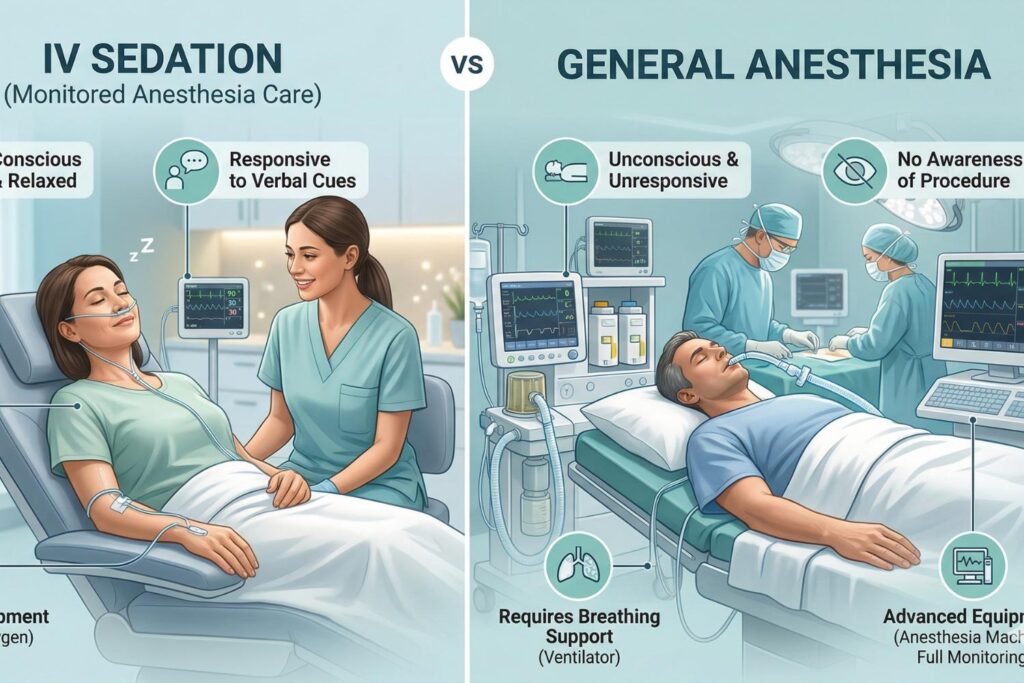
Here’s a clear comparison to help you understand the practical differences:
| Feature | IV Sedation | General Anesthesia |
|---|---|---|
| Consciousness | Semi-conscious or deeply relaxed | Fully unconscious |
| Pain Awareness | Minimal | None |
| Breathing | Natural | Often assisted |
| Memory | Partial or none | None |
| Recovery Time | Short | Longer |
| Risk Level | Lower | Higher |
| Use Cases | Dental, minor surgeries | Major surgeries |
When Is IV Sedation Typically Used?
IV sedation is commonly chosen for procedures that require relaxation but not full unconsciousness.
Common Uses
- Dental surgeries (wisdom teeth removal, implants)
- Minor cosmetic procedures
- Endoscopies and colonoscopies
- Some outpatient surgeries
Why Patients Prefer It
Many patients prefer IV sedation because:
- It reduces anxiety without full unconsciousness
- Recovery is quicker
- There’s less post-procedure grogginess
When Is General Anesthesia Necessary?
General anesthesia is essential for procedures that are:
- Highly invasive
- Long in duration
- Physically complex
Common Uses
- Major abdominal surgery
- Heart surgery
- Brain surgery
- Joint replacements
In these cases, being fully unconscious ensures patient safety and allows surgeons to perform without limitations.
Risks and Safety Considerations
No medical procedure is completely risk-free, and anesthesia is no exception.
IV Sedation Risks
- Mild breathing issues
- Allergic reactions (rare)
- Over-sedation (very rare under supervision)
General Anesthesia Risks
- Nausea and vomiting
- Sore throat (from breathing tube)
- Temporary confusion (especially in older adults)
- Rare but serious complications like respiratory issues
Important Insight
Studies suggest that general anesthesia carries a slightly higher risk, especially for older adults or those with underlying health conditions. However, modern advancements have made both options extremely safe when administered by trained professionals.
Recovery Experience: What Patients Actually Feel

After IV Sedation
- You wake up quickly
- You may feel slightly drowsy
- Most people can go home within hours
- Minimal side effects
After General Anesthesia
- Grogginess may last several hours
- Possible nausea
- You may need a longer observation period
- Full recovery can take a day or more
This difference is a major factor when comparing iv sedation vs general anesthesia, especially for people with busy schedules or limited downtime.
Cost Differences: What to Expect
Cost is another practical factor patients often overlook.
| Factor | IV Sedation | General Anesthesia |
|---|---|---|
| Cost Level | Lower | Higher |
| Hospital Stay | Usually not required | Often required |
| Equipment Needed | Minimal | Advanced monitoring systems |
General anesthesia typically costs more due to:
- Specialized equipment
- Anesthesiologist involvement
- Extended recovery care
How Doctors Decide Which One You Need
The choice between IV sedation and general anesthesia isn’t random—it’s based on multiple factors:
Key Decision Factors
- Type and duration of surgery
- Patient’s medical history
- Anxiety level
- Age and overall health
- Surgeon’s recommendation
For example, a highly anxious patient undergoing a minor procedure might still be offered deeper sedation.
Real-World Insight: Patient Preferences Are Changing
In recent years, there has been a noticeable shift toward minimally invasive procedures—and with that, increased use of IV sedation.
Why?
- Faster recovery fits modern lifestyles
- Lower perceived risk
- Better patient comfort
However, general anesthesia remains irreplaceable for complex surgeries.
Frequently Asked Questions (FAQ)
1. Is IV sedation safer than general anesthesia?
In most cases, IV sedation is considered safer because it is less invasive and doesn’t require full unconsciousness. However, both are safe when administered by professionals.
2. Will I feel pain during IV sedation?
No. While you may not be fully unconscious, you won’t feel pain during the procedure, and you likely won’t remember it.
3. How long does it take to recover from general anesthesia?
Recovery can take anywhere from a few hours to a full day, depending on the individual and the procedure.
4. Can I choose between IV sedation and general anesthesia?
Sometimes yes, but often the choice depends on the procedure and your doctor’s recommendation.
5. Which option is better for anxiety?
IV sedation is often preferred for anxious patients because it relaxes you deeply without the intensity of general anesthesia.
Conclusion
Understanding the difference between iv sedation vs general anesthesia is more than just medical knowledge—it’s about making informed decisions for your health and peace of mind.
IV sedation offers a lighter, faster-recovery option ideal for minor procedures and anxious patients. General anesthesia, on the other hand, is essential for complex surgeries where complete unconsciousness is necessary.
The right choice ultimately depends on your procedure, your health, and your doctor’s guidance. But one thing is certain: when you understand your options, you walk into surgery more confident—and that makes all the difference.