


When it comes to midsize and full-size pickup trucks, few badges spark as much debate as Toyota’s TRD lineup. If you’ve ever stood in a dealership comparing trims or scrolled through truck forums late at night, you’ve likely encountered the same burning question: trd sport vs trd off road — which one is actually better?
At first glance, they look similar. Both carry the respected TRD (Toyota Racing Development) name, both promise performance, and both come with aggressive styling cues. But underneath the surface, they are engineered for very different purposes. Choosing the wrong one could mean sacrificing comfort, performance, or capability depending on how you actually use your truck.
In this in-depth guide, we’ll break down the real-world differences between the TRD Sport and TRD Off Road trims across models like the Toyota Tacoma, Toyota Tundra, and Toyota 4Runner. Whether you’re an urban driver, weekend adventurer, or serious trail enthusiast, this comparison will help you make a confident decision.
Understanding Toyota’s TRD Lineup
Before diving into specifics, it’s important to understand what TRD represents.
TRD stands for Toyota Racing Development, the performance arm of Toyota. Originally focused on motorsports engineering, TRD has evolved into a performance-oriented sub-brand that enhances suspension systems, styling, and capability across Toyota’s truck and SUV lineup.
However, not all TRD trims are built the same. The TRD Sport leans toward on-road performance and styling, while the TRD Off Road is purpose-built for rugged terrain.
That difference is more significant than most buyers realize.
TRD Sport vs TRD Off Road: Suspension & Ride Quality

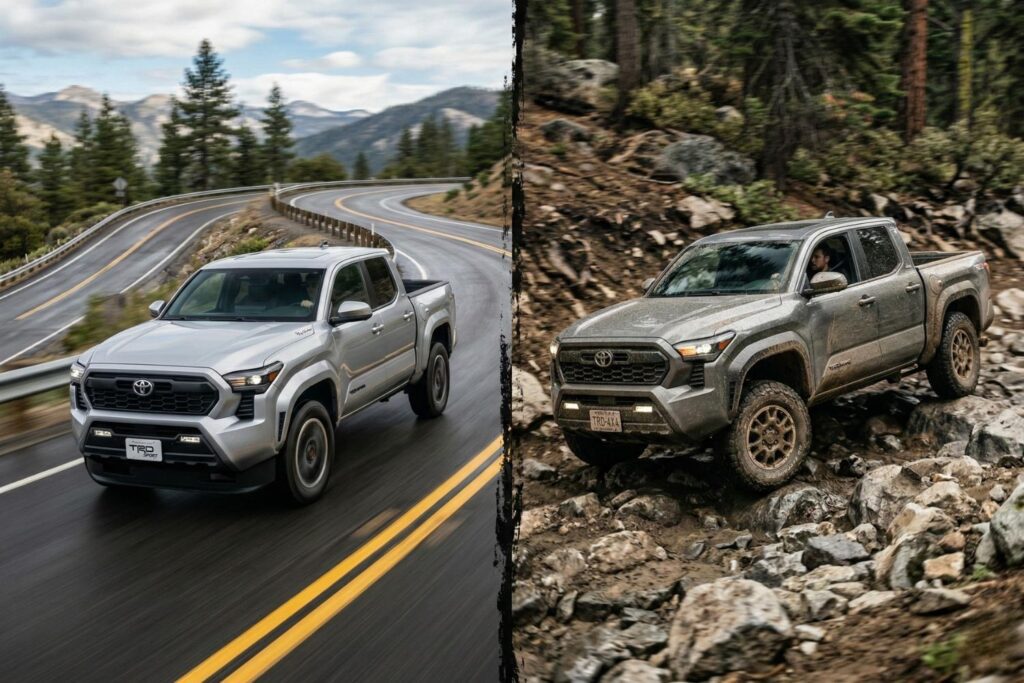
TRD Sport: Tuned for Pavement Performance
The TRD Sport is engineered for drivers who spend most of their time on highways, city roads, and suburban streets.
Key Suspension Features:
- Sport-tuned suspension
- Larger sway bars
- Road-focused shock absorbers
- Lower-profile tires (in many configurations)
The result? A firmer, more responsive ride with improved cornering stability. Body roll is reduced, steering feels sharper, and highway driving feels controlled and composed.
If you’re commuting daily or frequently driving at highway speeds, the TRD Sport provides a confident, almost SUV-like driving experience.
Ride Experience:
- Tighter steering feedback
- Minimal body sway
- Better road grip on pavement
- Slightly firmer ride over bumps
TRD Off Road: Built for Terrain Mastery
In contrast, the TRD Off Road prioritizes durability and articulation over on-road agility.
Key Suspension Features:
- Off-road-tuned shocks (often Bilstein or equivalent)
- Softer suspension travel
- Increased wheel articulation
- Higher ground clearance in some models
This setup allows the truck to absorb rocks, ruts, and uneven terrain without transferring excessive shock into the cabin.
Ride Experience:
- Smoother over rough surfaces
- More suspension travel
- Slightly softer feel on pavement
- Less sharp cornering compared to Sport
Real Insight: On smooth highways, the TRD Sport feels more planted. On dirt trails, the TRD Off Road feels more stable and confident.
Off-Road Capability: Where the Differences Truly Show
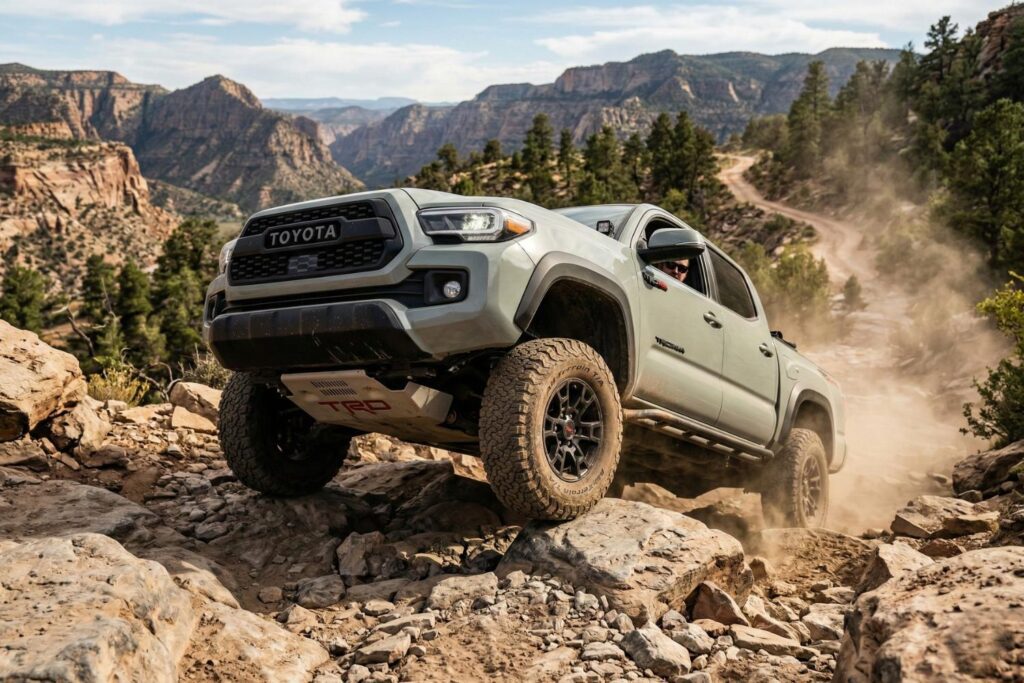
This is where the debate of trd sport vs trd off road becomes clear.
TRD Off Road’s Trail Technology
Most TRD Off Road trims include features specifically engineered for challenging terrain:
- Rear locking differential
- Multi-Terrain Select
- Crawl Control
- Skid plates
- Hill-start assist and descent control
These systems significantly improve traction in mud, sand, rocks, and snow.
For example, Crawl Control acts like low-speed cruise control for off-roading, automatically managing throttle and braking while you focus on steering. That’s not marketing hype — it’s genuinely useful on steep inclines.
TRD Sport’s Capability Limits
The TRD Sport is not incapable off-road — it’s still a truck. However, it typically lacks:
- Rear locking differential
- Advanced terrain management systems
- Heavy-duty skid plates
You can take it on dirt roads or light trails, but serious rock crawling or mudding? That’s not its primary design focus.
If your adventures are occasional and moderate, TRD Sport will handle them. If your lifestyle revolves around trails, the TRD Off Road is the smarter investment.
Exterior Styling Differences
Toyota intentionally differentiates these trims visually.
TRD Sport Styling
- Hood scoop (on many models)
- Color-matched bumpers
- Larger street-focused wheels (17–20 inch)
- Sleeker overall appearance
The Sport trim has a more urban, aggressive aesthetic. It appeals to drivers who want performance vibes without hardcore off-road ruggedness.
TRD Off Road Styling
- Blacked-out trim accents
- Chunkier all-terrain tires
- Unique badging
- More rugged stance
It looks tougher and more trail-ready — and that’s intentional.
Interior Features & Comfort
Surprisingly, interior differences are minimal.
Both trims typically include:
- Touchscreen infotainment
- Apple CarPlay & Android Auto
- Advanced driver-assistance features
- Premium seat materials (varies by package)
However, some Off Road models emphasize durability over luxury, while Sport trims may offer slightly more aesthetic upgrades depending on configuration.
Performance & Engine Options
In most cases, engine options are identical between TRD Sport and TRD Off Road within the same vehicle model.
For example, the Toyota Tacoma offers similar engine configurations across both trims, including turbocharged options in newer generations.
The real difference lies in tuning and suspension setup — not raw horsepower.
Data Comparison Table
Here’s a simplified side-by-side comparison:
| Feature | TRD Sport | TRD Off Road |
|---|---|---|
| Suspension | Sport-tuned | Off-road tuned |
| Ride Feel | Firm & responsive | Softer & terrain-ready |
| Rear Locking Differential | No | Yes |
| Terrain Modes | No | Yes |
| Skid Plates | Limited | Yes |
| Best For | Daily driving | Trail & rugged terrain |
| Visual Style | Sleek & urban | Rugged & aggressive |
Cost Considerations
Pricing varies by model and year, but generally:
- TRD Off Road may cost slightly more due to added mechanical hardware.
- Resale value can be stronger for Off Road trims in markets where outdoor lifestyles are popular.
According to industry resale trends, off-road-focused trims often retain value well due to niche demand and enthusiast appeal.
Who Should Buy TRD Sport?
You should choose TRD Sport if:
- You drive primarily on paved roads
- You want sharper handling
- You prefer a cleaner, street-focused aesthetic
- You don’t plan on serious trail adventures
It’s ideal for professionals, families, and drivers who want a sporty truck without extreme off-road gear.
Who Should Buy TRD Off Road?
You should choose TRD Off Road if:
- You frequently camp, trail ride, or explore rugged terrain
- You want factory-installed off-road hardware
- You value traction systems and locking differentials
- You plan to modify your truck further
For outdoor enthusiasts and weekend adventurers, it’s worth the upgrade.
Why This Debate Matters
The trd sport vs trd off road conversation isn’t just about badges — it’s about lifestyle alignment.
Buying a truck that doesn’t match your needs can lead to regret. Sport drivers may find Off Road too soft on highways. Off-road enthusiasts may find Sport limiting when terrain gets serious.
Choosing correctly saves money, improves driving satisfaction, and ensures your vehicle actually supports your lifestyle
Frequently Asked Questions (FAQ)
1. Is TRD Sport better than TRD Off Road?
Neither is universally better. TRD Sport is better for paved roads and daily driving, while TRD Off Road excels in rugged terrain.
2. Does TRD Sport have a locking differential?
In most configurations, no. TRD Off Road typically includes a rear locking differential, which is crucial for serious off-roading.
3. Which trim has a smoother highway ride?
TRD Sport generally provides a firmer but more controlled highway experience compared to the softer Off Road setup.
4. Is TRD Off Road worth the extra cost?
If you regularly drive off-road, absolutely. The added mechanical features justify the price difference.
5. Do both trims have the same engine?
Usually yes, within the same model. Differences lie in suspension and off-road technology rather than engine output.
Conclusion
When evaluating trd sport vs trd off road, the decision ultimately comes down to how and where you drive.
If your truck life is city streets, highways, and the occasional dirt path, the TRD Sport offers sharper handling and a sleek aesthetic. But if adventure calls — if you find yourself eyeing mountain trails, muddy paths, or rocky climbs — the TRD Off Road delivers the tools you’ll actually need.
Both trims reflect Toyota’s commitment to durability and performance. The key is choosing the one that aligns with your lifestyle — not just your garage.


