What Is Artificial Intelligence and How Is It Transforming the World?
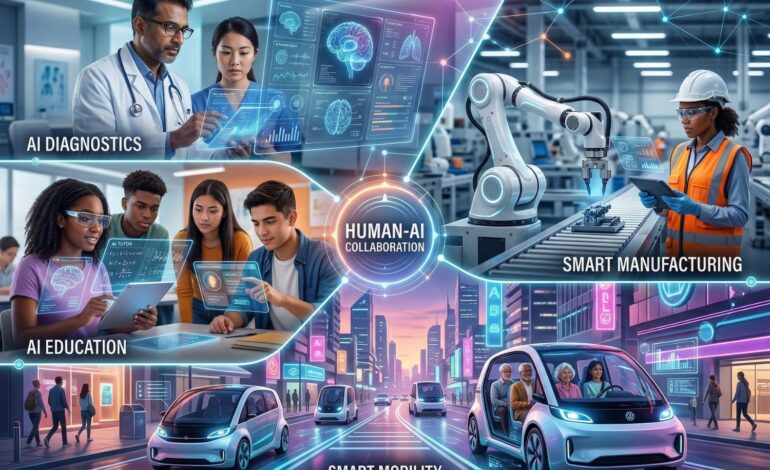

Artificial Intelligence (AI) has become more than just a buzzword — it is now an integral part of our daily lives. But what exactly is it, and how is it changing the world around us? In this comprehensive guide, we will explore what artificial intelligence means, where it came from, how it works, and the transformative impact it has had — and continues to have — on society, businesses, and the future of human progress.
Let’s begin with the fundamentals.
Introduction: Defining Artificial Intelligence
When most people hear the phrase “what is artificial intelligence“, they might picture smart robots or futuristic machines from sci‑fi films. In reality, AI is much broader, and its influence is already woven into our everyday digital experiences.
At its core, artificial intelligence refers to the ability of machines to perform tasks that normally require human intelligence. These tasks include learning from data, recognizing patterns, making decisions, understanding language, and solving complex problems — often with speed and accuracy beyond human capacity.
Through the lens of history, AI has progressed from simple rule‑based automation to advanced systems capable of deep learning and complex reasoning. This evolution has allowed AI to permeate nearly every sector of the global economy, reshaping how we work, live, and innovate.
A Brief History of AI: From Concepts to Reality
Although AI feels new, its origins date back to the 1950s, when pioneers like Alan Turing asked a simple yet profound question: “Can machines think?” Turing’s work laid the foundation for modern computing and paved the way for early research into intelligent systems.
During the 1956 Dartmouth Conference, the term “artificial intelligence” was coined, launching AI as an academic discipline. Initial breakthroughs included symbolic reasoning and rule‑based systems, but progress was slow due to limited computing power.
AI went through periods of high expectations (known as “AI summers”) and times of reduced funding and slow progress (“AI winters”). However, the explosion of data, advances in computing, and breakthroughs in machine learning — especially neural networks — ignited a powerful renaissance in AI research and applications.
Today, modern AI uses sophisticated algorithms and massive data sets to improve accuracy and performance. What was once theoretical is now the backbone of technologies like voice assistants, recommendation systems, autonomous vehicles, and more.
How Does Artificial Intelligence Work?
Although AI can sound complex, its basic mechanics can be understood through a few key components:
1. Data — The Fuel of AI
AI systems learn from data. The larger and more diverse the data, the better the AI can recognize patterns and make decisions. For example, an AI learning to identify cats needs thousands of images labeled as “cat” to learn the defining features.
2. Algorithms — Instructions That Learn
At its heart, AI uses algorithms — mathematical instructions that guide how data is processed and interpreted. Traditional programming tells a computer what to do with strict logic, whereas AI algorithms learn how to do it from examples.
3. Machine Learning — Learning From Experience
Machine learning (ML) is a subset of AI that focuses on training models to improve performance with experience. Rather than separate instructions, ML models look at data and derive insights. There are three main types:
- Supervised Learning: Learning with labeled examples.
- Unsupervised Learning: Finding hidden patterns without labels.
- Reinforcement Learning: Learning by trial and error through reward feedback loops.
4. Neural Networks and Deep Learning
Inspired by the human brain, neural networks are layers of interconnected nodes capable of complex pattern recognition. Deep learning, a powerful subset of neural networks, enables AI to interpret speech, images, and unstructured data with astonishing accuracy.
Where is AI Used Today?
AI is no longer confined to research labs — it is actively shaping various industries. Below are some real‑world areas where AI is making a profound difference:
1. Healthcare: Enhanced Patient Care
In healthcare, AI provides life‑saving support. Algorithms help radiologists detect tumors in medical images, predict patient deterioration in emergency rooms, and personalize treatment plans based on genetic information. For example, AI tools can analyze thousands of patient images in seconds — a task that would take humans hours or even days.
Healthcare providers also use AI to forecast disease outbreaks and support drug discovery, significantly reducing both time and cost.
2. Education: Personalized Learning Experiences
Education is becoming more individualized thanks to AI. Adaptive learning platforms adjust content based on student progress, helping learners tackle areas where they struggle and advance at their own pace. AI tutors can answer questions, provide feedback, and track progress — bringing quality education to more people around the world.
3. Business and Finance: Smarter Decisions
AI is transforming how organizations operate:
- Fraud Detection: Financial institutions use AI to recognize suspicious transactions in real time.
- Risk Management: AI predicts market trends and assesses risk with data‑driven insights.
- Customer Service: Chatbots and virtual assistants handle inquiries 24/7, improving efficiency and satisfaction.
These innovations reduce cost, increase speed, and enable smarter decision‑making across industries.
4. Transportation: Safer and Smarter Mobility
Self‑driving cars, powered by advanced AI perception systems, promise to reduce accidents and revolutionize mobility. AI is also used for traffic prediction and route optimization in logistics, ensuring goods and people reach their destinations faster and more safely.
5. Entertainment and Media: Personalized Experiences
Ever wondered how streaming services know your favorite shows? AI analyzes viewing habits and recommends content tailored to your tastes. Music platforms use AI to suggest songs you might love, and gaming developers create smarter opponents with AI agents capable of adaptive strategy.
6. Agriculture: Feeding the Future
AI supports sustainable farming — from predicting weather effects to monitoring crop health using aerial drones and sensors. These tools help farmers optimize irrigation, reduce waste, and increase crop yields — a crucial advancement as the world’s population grows.
How AI Is Impacting Jobs and the Economy
One of the most widely discussed effects of AI is its influence on jobs and the workforce. There are two major trends:
1. Automation of Repetitive Tasks
AI can handle routine and repetitive jobs — from data entry to customer queries — freeing human workers to focus on creativity, problem‑solving, and innovation. In manufacturing, robots equipped with AI assist in precision tasks, improving efficiency and safety.
However, this automation also raises concerns about job displacement in certain roles. Preparing the workforce with up‑skilling and re‑skilling programs is essential to ensure people can transition to higher‑value work.
2. New Jobs and Opportunities
While some jobs may decline, new roles are emerging in AI research, data science, AI ethics, and system maintenance. Moreover, AI drives entrepreneurial growth, enabling startups and innovators to solve complex problems in creative ways.
The economy benefits when AI increases productivity and opens new business models, but this transition must be managed thoughtfully to ensure fairness and inclusion.
Ethical Considerations and Risks of AI
As AI becomes more pervasive, it raises important ethical questions:
1. Bias in AI Systems
If AI learns from biased data, it can replicate and magnify those biases. Ensuring fairness in AI requires careful oversight, transparency, and continuous evaluation.
2. Privacy Concerns
AI systems often process vast amounts of personal data. Protecting privacy and securing sensitive information is critical to maintaining public trust and safeguarding individual rights.
3. Accountability and Regulation
Who is responsible when an AI system makes a harmful decision? Policymakers and technologists are working together to define clear regulations that ensure safety, fairness, and accountability without stifling innovation.
4. Global Inequality
AI’s benefits risk being unevenly distributed, potentially widening the gap between developed and developing regions. Promoting equitable access to AI tools and knowledge is important for inclusive global progress.
AI in Everyday Life: You’re Already Using It
Artificial intelligence isn’t something far off in the future — it’s already here. Many of us interact with AI daily without even realizing it:
- Voice assistants answer questions and help with tasks.
- Email filters automatically block spam.
- Smart home devices adjust lighting and temperature.
- Navigation apps optimize routes in real time.
These systems enrich our lives by making technology more responsive and intuitive.
The Future of AI: What’s Next?
The potential of artificial intelligence continues to grow. Here are a few exciting future directions:
1. General AI
Today’s AI operates within narrow, specific tasks. The long‑term goal is to achieve general intelligence — systems that can adapt to new situations, reason deeply, and perform a wide range of functions akin to human cognition. Achieving this safely is a major scientific and ethical challenge.
2. Human‑AI Collaboration
Rather than replacing humans, the most beneficial vision of AI emphasizes collaboration. AI assistants could amplify human creativity, support complex problem solving, and enhance innovation across fields.
3. AI for Social Good
AI is being used to tackle global challenges such as climate modeling, disaster response, medical diagnosis in remote regions, and more. With responsible deployment, AI has the power to improve lives at scale.
Conclusion: AI Is Here to Stay
Artificial intelligence is one of the most transformative technologies of our time. From healthcare to education, transportation to entertainment, its impact is deep, pervasive, and evolving rapidly.
Understanding what artificial intelligence is, how it works, and the ways it affects our world empowers us to embrace its benefits while critically navigating its challenges.
As individuals, communities, and nations, our task is not to resist AI — but to guide its growth with responsibility, fairness, and humanity at the center.