


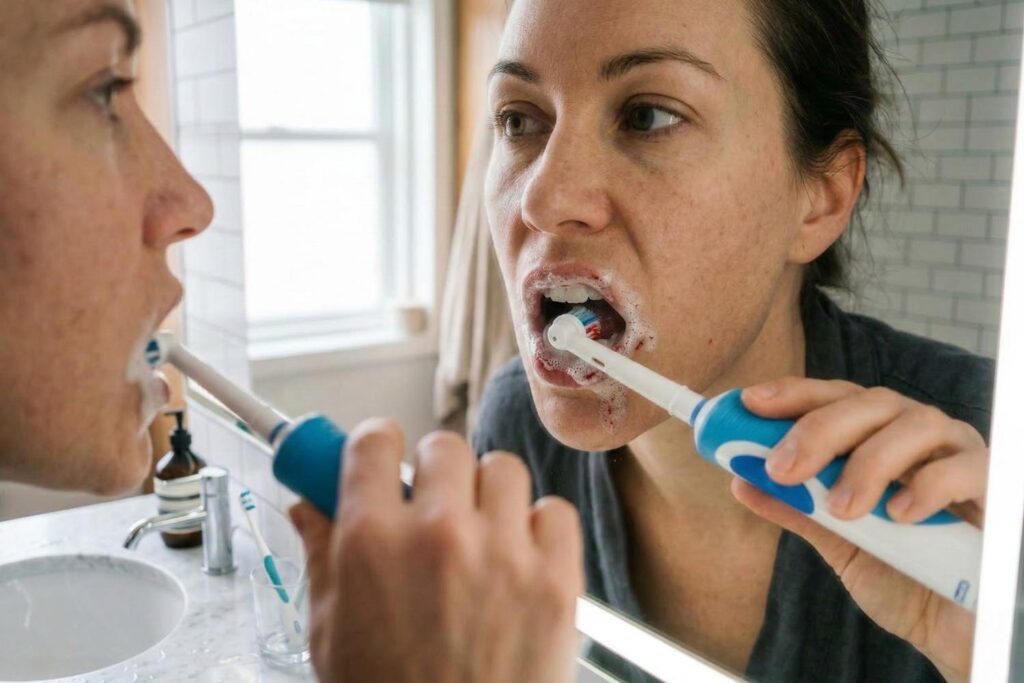
Many people feel alarmed when they see blood in the sink while brushing their teeth. If you’ve ever wondered “why do my gums bleed when brushing my teeth”, you’re not alone. Bleeding gums are a common dental concern that affects millions of people worldwide. While it may seem minor at first, bleeding gums can sometimes signal deeper oral health issues.
In most cases, bleeding gums are one of the earliest warning signs of gum disease, also known as gingivitis. However, the cause may also be something as simple as brushing too hard or using the wrong toothbrush. Understanding the real reason behind bleeding gums is important because untreated gum problems can lead to serious dental complications over time.
Your gums play a vital role in protecting your teeth and supporting overall oral health. When they become inflamed, sensitive, or infected, they start showing warning signs — and bleeding during brushing is often the first one.
In this guide, we’ll explore why do my gums bleed when brushing my teeth, the possible causes, early symptoms of gum disease, treatment options, and effective ways to prevent this issue from happening again.
What Does It Mean When Your Gums Bleed?
Bleeding gums usually indicate that your gum tissue is irritated or inflamed. Healthy gums should be firm, pink, and should not bleed during normal brushing or flossing.
If you notice bleeding regularly, it’s your body’s way of telling you something isn’t right in your oral hygiene routine or overall gum health.
Some people ignore bleeding gums because the pain may be minimal. However, early treatment can prevent long-term dental damage.
If you’re constantly asking yourself why do my gums bleed when brushing my teeth, the answer often lies in how well you care for your teeth and gums.
The Most Common Causes of Bleeding Gums
1. Poor Oral Hygiene
One of the most common answers to why do my gums bleed when brushing my teeth is poor oral hygiene. When plaque builds up along the gum line, bacteria begin to irritate the gums.
Over time, this leads to inflammation known as gingivitis.
Signs of plaque buildup include:
- Red gums
- Swollen gums
- Bad breath
- Bleeding during brushing
If plaque isn’t removed through regular brushing and flossing, it can harden into tartar, which only dentists can remove.
2. Brushing Too Hard
Many people think brushing harder cleans their teeth better. In reality, aggressive brushing can damage your gums and cause bleeding.
Using a hard-bristled toothbrush or applying too much pressure can irritate sensitive gum tissue.
Dentists recommend:
- Using a soft-bristled toothbrush
- Brushing gently in circular motions
- Brushing for about two minutes
This protects both your teeth and gums.
3. Gingivitis (Early Gum Disease)
Gingivitis is the early stage of gum disease and one of the biggest reasons people search for why do my gums bleed when brushing my teeth.
This condition occurs when plaque bacteria inflame the gums.
Symptoms of gingivitis include:
- Bleeding gums
- Swollen gums
- Redness around teeth
- Persistent bad breath
The good news is that gingivitis is reversible with proper dental care.
4. Flossing After a Long Time
If you start flossing after months or years of neglecting it, your gums may bleed initially.
This doesn’t mean flossing is harmful. In fact, it means your gums are inflamed and need cleaning.
After a few days of consistent flossing, the bleeding usually stops.
5. Vitamin Deficiencies
Your body needs certain vitamins to maintain healthy gums.
A lack of Vitamin C or Vitamin K can lead to bleeding gums.
Vitamin C helps strengthen gum tissue and boost immunity against bacterial infections.
Foods rich in Vitamin C include:
- Oranges
- Strawberries
- Bell peppers
- Broccoli
A balanced diet is essential for good oral health.
6. Hormonal Changes
Hormonal fluctuations during pregnancy, menstruation, or menopause can make gums more sensitive.
Many pregnant women experience pregnancy gingivitis, where gums become swollen and bleed easily.
These hormonal changes increase blood flow to the gums, making them more reactive to plaque bacteria.
7. Certain Medications
Some medications can increase the likelihood of gum bleeding.
These include:
- Blood thinners
- Aspirin
- Certain heart medications
Blood-thinning drugs reduce the blood’s ability to clot, which can cause gums to bleed more easily.
If you suspect medication is causing the issue, consult your doctor or dentist.
Early Signs of Gum Disease
Bleeding gums are often the first warning sign of gum disease.
If gingivitis is not treated, it can progress into periodontitis, a serious infection that damages the gums and bones supporting the teeth.
Early symptoms include:
- Bleeding while brushing
- Swollen gums
- Receding gums
- Bad breath
- Tender gum tissue
If you frequently wonder why do my gums bleed when brushing my teeth, it’s important to look for these warning signs before the condition worsens.
How Dentists Diagnose Gum Problems
Dentists check gum health during routine dental exams.
They typically examine:
- Gum color
- Gum swelling
- Depth of gum pockets
- Plaque buildup
They may also use a periodontal probe to measure the space between the teeth and gums.
Healthy gums usually have pockets of 1–3 mm.
Deeper pockets may indicate gum disease.
Treatment Options for Bleeding Gums
Professional Dental Cleaning
A professional dental cleaning removes plaque and tartar buildup.
This is usually the first step in treating gingivitis.
Dentists may recommend cleanings every six months.
Improved Oral Hygiene
Brushing twice daily and flossing regularly can significantly reduce gum inflammation.
Dentists recommend:
- Soft-bristled toothbrush
- Fluoride toothpaste
- Daily flossing
- Antibacterial mouthwash
Scaling and Root Planing
For more advanced gum disease, dentists perform a deep cleaning procedure called scaling and root planing.
This removes bacteria below the gum line and smooths the tooth roots to prevent further buildup.
Home Remedies That May Help
While professional dental care is essential, some home remedies may support gum health.
These include:
Salt Water Rinse
Saltwater helps reduce bacteria and inflammation.
Mix half a teaspoon of salt in warm water and rinse twice daily.
Aloe Vera
Aloe vera has natural anti-inflammatory properties that can soothe irritated gums.
Green Tea
Green tea contains antioxidants that help fight bacteria linked to gum disease.
How to Prevent Bleeding Gums
Prevention is always better than treatment.
Follow these tips to maintain healthy gums:
Brush Twice Daily
Use a gentle brushing technique.
Floss Every Day
Floss removes plaque between teeth where toothbrushes can’t reach.
Visit Your Dentist Regularly
Routine checkups help detect problems early.
Eat a Balanced Diet
Include vitamins and minerals that support gum health.
Avoid Smoking
Smoking significantly increases the risk of gum disease.
When Should You See a Dentist?
Occasional gum bleeding may not be serious, but persistent bleeding should never be ignored.
You should see a dentist if:
- Bleeding lasts longer than a week
- Gums are swollen or painful
- Teeth feel loose
- Bad breath doesn’t go away
Early treatment prevents severe gum disease and tooth loss.
The Connection Between Gum Health and Overall Health
Many people don’t realize that gum health is closely connected to overall health.
Research suggests gum disease may be linked to conditions such as:
- Heart disease
- Diabetes
- Stroke
- Respiratory infections
This is another reason why people searching why do my gums bleed when brushing my teeth should take the issue seriously.
Healthy gums contribute to a healthier body.
Final Thoughts
Seeing blood when brushing your teeth can be concerning, but it’s often a sign that your gums need better care.
If you’ve been asking why do my gums bleed when brushing my teeth, the most likely causes include plaque buildup, gingivitis, aggressive brushing, or nutritional deficiencies.
The good news is that bleeding gums are usually treatable and preventable with proper oral hygiene and regular dental visits.
Taking action early can help you avoid more serious gum disease and protect your smile for years to come.
Healthy gums are the foundation of a healthy mouth — and a confident smile.


