Tesla Rolls Out Aggressive Discounts as Tesla Sales Down Trend Looms
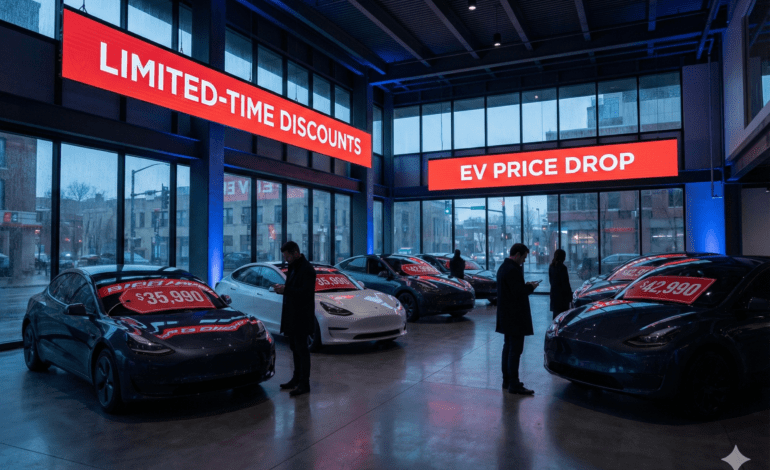

Tesla has long been viewed as the unstoppable force of the electric vehicle (EV) industry. For years, it dominated headlines with record-breaking deliveries, soaring stock prices, and bold promises from CEO Elon Musk. But as 2025 unfolds, a noticeable shift is taking place. Tesla is rolling out aggressive discounts across major markets, and analysts are increasingly warning that a tesla sales down trend may no longer be a short-term hiccup—it could be a sign of deeper structural challenges.
From price cuts on flagship models to promotional financing offers, Tesla’s recent strategy has raised eyebrows across Wall Street and the global auto industry. Is this a smart move to defend market share, or a reaction to slowing demand and intensifying competition?
In this deep-dive analysis, we’ll explore why Tesla sales are under pressure, what these aggressive discounts really mean, how competitors are reshaping the EV landscape, and what the future may hold for the world’s most talked-about automaker.
The Shift in Tesla’s Sales Momentum
For most of the last decade, Tesla enjoyed a near-mythical growth trajectory. Annual deliveries surged, factories expanded across continents, and waiting lists for new models stretched for months. But that momentum has started to cool.
Recent delivery reports indicate that growth is no longer guaranteed. In several key markets—including the United States, China, and parts of Europe—Tesla has struggled to maintain the blistering pace of previous years. This slowdown has fueled conversations around tesla sales down, a phrase now appearing more frequently in investor notes and industry commentary.
One of the most telling signs is inventory buildup. Tesla traditionally operated on a demand-heavy model where vehicles were sold almost as fast as they were produced. Now, rising inventory levels suggest demand is not keeping up with supply at the same rate.
Why Tesla Is Offering Aggressive Discounts
1. Softening Global Demand
One of the biggest reasons behind Tesla’s price cuts is a global slowdown in consumer spending. High interest rates, inflationary pressures, and economic uncertainty have made big-ticket purchases like electric vehicles harder to justify.
While EVs promise long-term savings, their upfront costs still deter many buyers. As budgets tighten, even loyal Tesla fans are delaying purchases—contributing to the tesla sales down narrative.
2. Intensifying EV Competition
Tesla is no longer the only compelling EV option. Traditional automakers and new EV startups have entered the market aggressively, offering vehicles that rival Tesla on range, technology, and price.
Brands are now producing:
- Sleeker interiors
- Competitive driving ranges
- Advanced driver-assistance features
- Lower-priced EV alternatives
As a result, Tesla’s once-unique value proposition is being challenged, forcing the company to use pricing as a competitive weapon.
3. Market Saturation in Key Regions
In early-adopter markets like California, Norway, and parts of China, EV adoption is reaching saturation. Most consumers who wanted a Tesla already have one. Future growth depends on convincing more price-sensitive buyers—hence the discounts.
How Discounts Impact Tesla’s Profit Margins
Aggressive price cuts may boost short-term sales, but they come at a cost. Tesla’s automotive gross margins, once the envy of the industry, have been under pressure.
Lower prices mean:
- Reduced profit per vehicle
- Greater reliance on volume to maintain revenue
- Increased vulnerability during demand slowdowns
This has alarmed investors who were accustomed to Tesla’s premium margins. While Tesla still enjoys cost advantages from vertical integration and scale, sustained discounting could reshape its financial profile.

Discounts vs. Brand Perception: A Risky Balance
Tesla built its brand on innovation, aspiration, and premium technology. For many buyers, owning a Tesla was as much about identity as transportation. But frequent discounts risk diluting that image.
When consumers see prices drop repeatedly, they may:
- Delay purchases expecting further cuts
- Question the long-term value of their vehicle
- Lose confidence in resale value
This dynamic can worsen a tesla sales down cycle, where price cuts temporarily boost demand but weaken brand strength over time.
China: The Battleground Defining Tesla’s Future
China remains Tesla’s most critical international market—and its most challenging.
Local EV manufacturers have:
- Deep government support
- Faster product refresh cycles
- Aggressive pricing strategies
Tesla’s Shanghai factory is among its most efficient, yet the company has still resorted to discounts and incentives in China. This signals not strength, but fierce competition.
If Tesla cannot sustain growth in China, its global sales narrative becomes significantly weaker.
The Role of Interest Rates and Financing
Another factor contributing to tesla sales down concerns financing. Higher interest rates have made auto loans more expensive, even for relatively affluent buyers.
Tesla’s response has included:
- Low-interest financing offers
- Lease incentives
- Limited-time promotions
These tools help offset rate pressure but further squeeze margins. The reliance on incentives suggests that organic demand alone may not be enough right now.
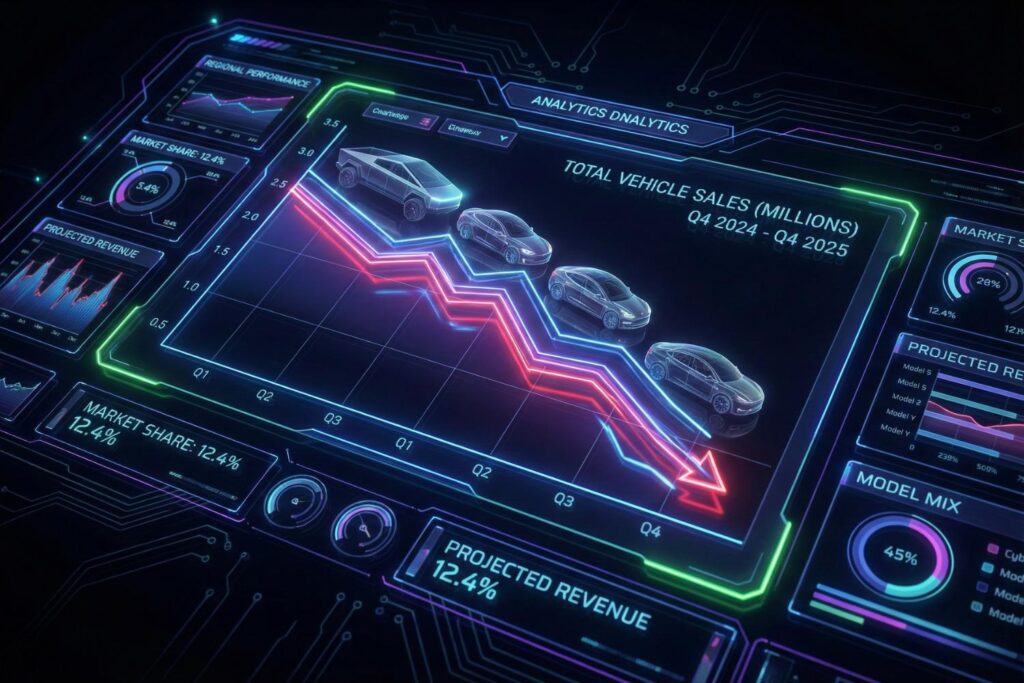
Tesla Sales Down: Temporary Dip or Long-Term Trend?
Tesla Sales Down: Temporary Dip or Long-Term Trend?
The big question remains: is this just a temporary slowdown or the beginning of a longer-term shift?
Arguments for a Temporary Dip
- Macroeconomic pressures may ease
- New models and refreshes could reignite demand
- Autonomous driving advancements may unlock new revenue streams
Arguments for a Long-Term Shift
- EV competition is only getting stronger
- Price wars reduce profitability industry-wide
- Consumer expectations are evolving rapidly
If Tesla cannot differentiate beyond price, the tesla sales down trend may persist longer than many expect.
Elon Musk’s Strategy: Volume Over Margins
Elon Musk has made it clear that Tesla prioritizes long-term dominance over short-term profits. The discount strategy aligns with this philosophy—sell more cars today to secure market leadership tomorrow.
This approach bets on:
- Software revenue growth
- Autonomous driving subscriptions
- Energy and AI business expansion
While bold, it requires patience from investors and continued consumer trust.
What This Means for Consumers
For buyers, this period is arguably the best time ever to purchase a Tesla. Discounts, incentives, and improved availability have lowered the barrier to entry.
However, buyers should also consider:
- Potential resale value fluctuations
- Future price volatility
- Rapid technology updates
The upside is affordability; the downside is uncertainty.
Tesla’s Stock and Investor Sentiment
Stock market reactions often mirror sales concerns. As talk of tesla sales down grows, volatility has increased. Investors are closely watching delivery numbers, margins, and guidance.
Confidence now depends on Tesla’s ability to:
- Stabilize demand without endless discounts
- Protect brand value
- Prove new revenue streams are viable
The Road Ahead for Tesla
Tesla remains a powerhouse with unmatched scale, technology, and vision. But the era of effortless growth appears to be over.
Aggressive discounts signal adaptation—not collapse. Whether this strategy succeeds will depend on how well Tesla balances affordability, innovation, and brand prestige.
One thing is certain: the EV market has matured, and Tesla must now fight harder than ever to stay ahead.
Final Thoughts
The rise of aggressive discounts amid a tesla sales down narrative marks a defining chapter for Tesla. What was once an unstoppable growth machine is now navigating a far more complex, competitive, and price-sensitive environment.
If Tesla can convert short-term pricing pressure into long-term dominance, today’s challenges may be remembered as a strategic pivot rather than a warning sign. If not, this moment could mark the beginning of a more conventional—yet still influential—automaker journey.