Lovebirds and Lifelong Bonds: What These Loyal Birds Teach Us About Relationships, Commitment, and Emotional Intelligence
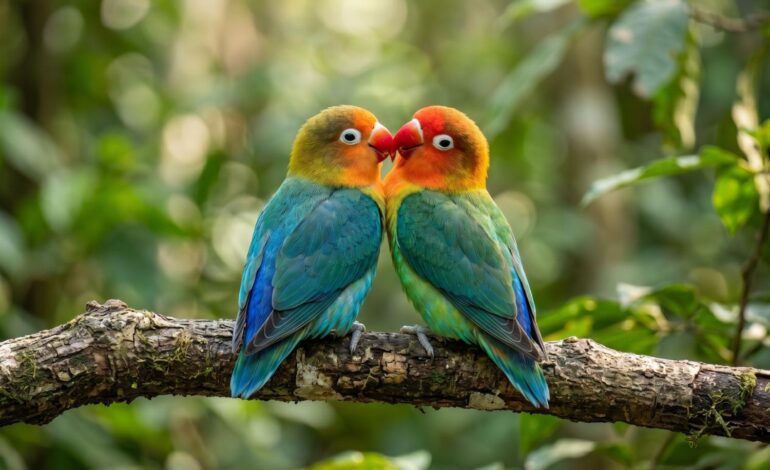

There’s something quietly powerful about watching a pair of lovebirds.
They sit close—almost impossibly close—gently preening each other, chirping in soft harmony, moving as if guided by a shared rhythm. To an outsider, it may look like simple instinct. But if you pause long enough, it begins to feel like something more—something deeply familiar.
We often search for advice about relationships in books, podcasts, or social media. Yet, in nature, some of the most profound lessons are unfolding every single day—without noise, without performance.
Lovebirds are among the most fascinating examples of loyalty and emotional connection in the animal world. Their behavior isn’t just adorable—it’s instructive. These small parrots demonstrate patterns of bonding, communication, and care that mirror some of the most essential principles of human relationships.
This isn’t about romanticizing animals or pretending their lives are identical to ours. It’s about observing patterns that have stood the test of time and asking:
What Are Lovebirds? A Quick Understanding
Before we dive into the deeper lessons, it helps to understand what lovebirds actually are.
Lovebirds are small, colorful parrots native to Africa. They belong to the genus Agapornis, which literally means “love birds” in Greek—agape (love) and ornis (bird).
They are known for:
- Forming strong pair bonds
- Spending most of their time close to their partner
- Engaging in mutual grooming (called allopreening)
- Displaying distress when separated
Unlike many species that come together only for mating seasons, lovebirds often form long-term bonds that can last for years—even a lifetime in some cases.
That’s where the fascination begins.
The Power of Pair Bonding: More Than Just Romance
One of the most striking traits of lovebirds is their ability to form deep, lasting bonds.
But here’s the important distinction:
This bond isn’t just about mating—it’s about partnership.
In the wild, survival is not guaranteed. Food is scarce, predators are everywhere, and environmental conditions can be harsh. Having a reliable partner increases the chances of survival.
Lesson for humans: Relationships thrive when they are built on partnership, not just attraction.
In real life, relationships often fail when they are based purely on emotional highs—chemistry, excitement, or external validation. But long-term stability comes from:
- Shared responsibility
- Emotional support
- Consistency
Think about successful couples you’ve seen in real life—not just online. They don’t just “love” each other. They show up for each other.
Lovebirds don’t perform love. They practice it.
Communication Without Words: Emotional Intelligence in Action
Lovebirds don’t speak languages like we do—but they communicate constantly.
Through:
- Body language
- Vocal tones
- Physical closeness
- Subtle behavioral cues
They understand each other’s needs with surprising accuracy.
For example:
- A slight shift in posture can signal discomfort
- Soft chirping can indicate reassurance
- Grooming behavior can calm stress
This is emotional intelligence in its purest form.
Lesson for humans: Communication is not just about what you say—it’s about what you understand.
In many relationships, conflict arises not because people don’t talk—but because they don’t listen beyond words.
Real emotional intelligence involves:
- Reading moods
- Recognizing unspoken needs
- Responding with awareness
A partner may say “I’m fine,” but their tone, body language, or silence might suggest otherwise.
Lovebirds don’t ignore those signals. Neither should we.
Consistency Over Intensity: The Secret to Long-Term Bonds
One thing you’ll notice about lovebirds is that their affection isn’t dramatic—it’s consistent.
They don’t have “grand gestures” in the way humans do. Instead, they repeat small acts daily:
- Sitting close
- Grooming each other
- Sharing food
- Staying physically connected
These small actions build trust over time.
Lesson for humans: Long-term relationships are built on consistency, not occasional intensity.
Many people mistake passion for commitment. But passion can fade if it’s not supported by steady effort.
Real-world example:
A couple who checks in daily, supports each other during stress, and maintains small habits of connection will often have a stronger bond than a couple relying on occasional big romantic moments.
Lovebirds remind us that:
“What you do every day matters more than what you do once in a while.”
The Role of Trust and Safety
Lovebirds are vulnerable creatures. Their survival depends on their ability to feel safe—not just physically, but socially.
When bonded, they:
- Eat together
- Rest together
- Stay close during danger
This constant proximity is only possible because of trust.
If trust is broken, stress levels rise, and behavioral issues can appear—even in captivity.
Lesson for humans: Trust is not optional—it’s foundational.
In human relationships, trust is often treated as something abstract. But in reality, it shows up in everyday actions:
- Keeping promises
- Being reliable
- Respecting emotional boundaries
- Avoiding betrayal (big or small)
Without trust, even the strongest emotional connection becomes unstable.
Lovebirds don’t question their partner’s presence. They rely on it.
Handling Conflict: What Lovebirds Don’t Do
Here’s something interesting—lovebirds do experience conflict.
They can:
- Argue over space
- Compete for resources
- Show brief aggression
But these conflicts are usually:
- Short-lived
- Non-destructive
- Followed by reconnection
They don’t hold grudges. They don’t escalate unnecessarily.
Lesson for humans: Conflict is normal—but how you handle it defines the relationship.
In real life, relationships often fail not because of conflict—but because of:
- Ego
- Prolonged resentment
- Lack of resolution
Healthy conflict resolution involves:
- Addressing issues quickly
- Avoiding personal attacks
- Rebuilding connection afterward
Lovebirds don’t “win arguments.” They restore balance.
Emotional Dependency vs Healthy Attachment
Now, it’s important to address a common misconception.
Lovebirds are often seen as “inseparable,” but this doesn’t mean unhealthy dependency.
In the wild, they still:
- Explore independently
- Forage for food
- Interact with their environment
Their bond enhances their life—it doesn’t limit it.
Lesson for humans: Healthy relationships support individuality, not replace it.
Many people confuse attachment with dependency.
Healthy attachment means:
- You choose your partner—not need them to function
- You grow individually while staying connected
- You maintain your identity
Unhealthy dependency, on the other hand, can lead to:
- Loss of self
- Emotional instability
- Control issues
Lovebirds stay close—but they don’t lose themselves.
Real-World Reflection: Human Relationships Today
If we’re honest, modern relationships face challenges that didn’t exist before:
- Digital distractions
- Social media comparisons
- Fast-paced lifestyles
- Fear of commitment
People want connection—but often struggle with consistency.
This is where observing nature becomes valuable.
Lovebirds don’t deal with:
- External validation
- Online attention
- Unrealistic expectations
Their bond is simple—but strong.
Lesson: Simplicity often strengthens connection.
Real-world application:
- Put your phone away during conversations
- Focus on presence rather than performance
- Build habits, not just moments
What Science Says About Bonding (Not Just Birds)
Interestingly, scientific studies on animals—including birds—show that bonding behaviors are linked to hormones like:
- Oxytocin (bonding hormone)
- Dopamine (reward system)
Humans operate on similar biological systems.
This means:
- Physical closeness increases emotional connection
- Repeated positive interactions strengthen bonds
- Trust reduces stress responses
Lovebirds aren’t “romantic” in a human sense—but their behavior aligns with fundamental biological principles of bonding.
Practical Lessons You Can Apply Today
Let’s bring everything together into actionable insights:
1. Show Up Consistently
Don’t rely on big moments. Build daily habits of connection.
2. Improve Emotional Awareness
Pay attention to tone, body language, and mood—not just words.
3. Build Trust Through Actions
Be reliable. Keep promises. Stay honest.
4. Resolve Conflicts Quickly
Avoid dragging issues. Address them calmly and early.
5. Maintain Individual Identity
Stay connected—but don’t lose yourself.
6. Value Simplicity
Connection doesn’t need to be complicated to be meaningful.
Why This Matters More Than Ever
In a world that often prioritizes speed over depth, relationships can become transactional.
People swipe, scroll, and move on quickly.
But meaningful relationships—whether romantic, familial, or friendships—require:
- Time
- Effort
- Emotional intelligence
Lovebirds remind us of something simple yet powerful:
Connection is not about perfection. It’s about presence, consistency, and care.
Conclusion: Nature’s Quiet Wisdom
Lovebirds don’t read relationship advice.
They don’t attend therapy sessions.
They don’t analyze emotions in complex ways.
And yet, they demonstrate:
- Loyalty
- Communication
- Trust
- Balance
Perhaps the lesson isn’t to copy them—but to observe what works.
Sometimes, the most meaningful insights come from the simplest places.
A pair of birds, sitting close together, saying nothing—and yet understanding everything.