LEGO in Space: How Creativity and Play Are Helping Astronauts Think, Build, and Survive Beyond Earth

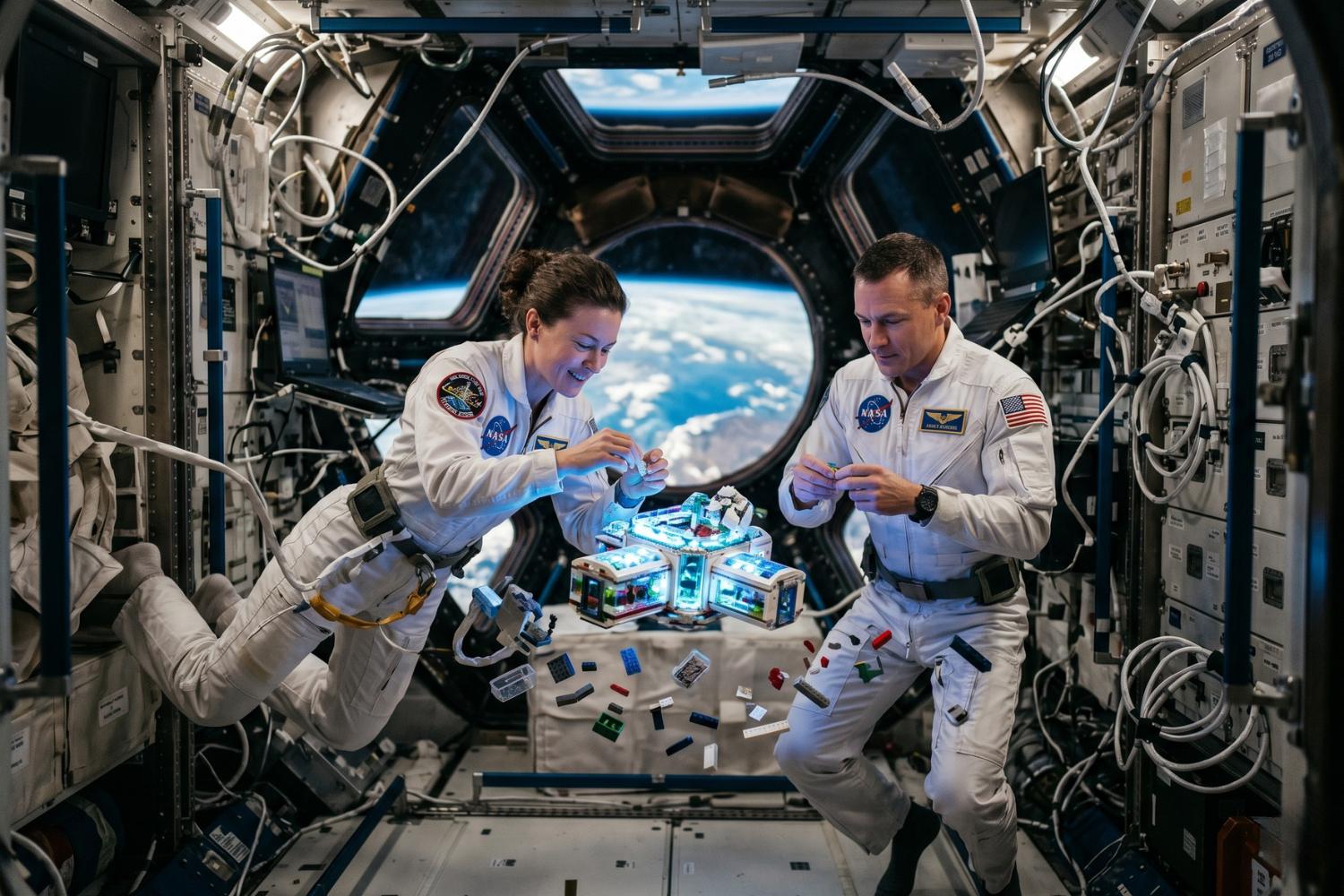
When people imagine astronauts floating inside the International Space Station, they usually picture serious work—high-tech equipment, spacewalks, experiments, and constant monitoring of life-support systems. What most people don’t imagine is LEGO bricks.
Yes, the same colorful plastic blocks children use on Earth have quietly become part of space culture. But in orbit, LEGO is not just a toy. It has become a tool for creativity, problem-solving, engineering thinking, stress relief, and even survival preparation.
The idea of lego in space might sound playful at first, but behind it lies a serious truth: in extreme environments like space, creativity is not optional—it is essential.
This article explores how LEGO and similar creative tools are helping astronauts think differently, stay mentally balanced, and even simulate real engineering challenges beyond Earth.
Why Creativity Matters in Space
Space is one of the most unforgiving environments humans have ever explored. There is no gravity, no breathable atmosphere, and no room for error. Every decision matters.
In such conditions, astronauts rely heavily on structured procedures. But structured thinking alone is not enough. They also need:
- Creative problem-solving
- Flexible thinking under pressure
- Mental resilience in isolation
- Quick adaptation to unexpected failures
This is where playful systems like LEGO unexpectedly become useful.
NASA and other space agencies have long studied how humans behave in isolation. One consistent finding is that creative engagement improves mental stability and performance under stress.
Learn more about the broader field of space exploration and how human behavior adapts beyond Earth.
LEGO as a Cognitive Training Tool
LEGO is fundamentally about systems thinking. You take small parts and build something larger, structured, and functional. That mirrors exactly how astronauts think in space missions.
On Earth, LEGO is often seen as a toy. But in astronaut training environments, it becomes:
- A simulation of modular engineering
- A test of spatial reasoning
- A tool for problem decomposition
- A way to practice step-by-step construction under constraints
This kind of thinking is especially important when dealing with spacecraft systems, which are also modular by design.
Even NASA engineers have used LEGO kits to explain spacecraft assembly processes to trainees.
For context, LEGO NASA collaboration sets like the Apollo Saturn V have helped inspire interest in real missions, blending education with engineering awareness.
LEGO in Microgravity: What Actually Happens?
One of the most fascinating questions is: what happens when you use LEGO in space?
On Earth, gravity helps pieces stay in place while you build. In orbit, there is no “down.” Everything floats.
Inside the International Space Station (ISS), astronauts must carefully handle small objects because they can drift away easily. LEGO pieces behave like tiny floating puzzle parts.
This creates both challenges and opportunities:
Challenges:
- Pieces float away easily
- Assembly requires containment systems
- No stable surface for building
Opportunities:
- Encourages precision control
- Improves hand-eye coordination
- Simulates real micro-assembly tasks
This connects closely with real engineering work done in space, such as satellite repair and equipment maintenance.
Learn more about the environment where this happens in International Space Station missions.
Real NASA and ESA Engagement with LEGO
LEGO has not officially been used as a core mission tool by NASA in a scientific sense, but its presence in space culture is very real.
Astronauts have taken LEGO sets to the ISS for:
- Educational demonstrations
- Public outreach videos
- Personal recreation
- Communication with students on Earth
The European Space Agency (ESA) and NASA both encourage educational STEM outreach programs where LEGO is frequently used as a teaching medium.
One well-known example is astronaut demonstrations showing how construction works differently in zero gravity using small objects like LEGO bricks.
These moments are not just entertaining—they help scientists explain complex ideas like:
- Structural integrity in space
- Reaction forces in microgravity
- Modular construction systems
Mental Health in Space: Why Play Matters
Living in space is mentally demanding. Astronauts are confined in small modules for months. They are far from family, nature, and normal human environments.
This is where creative play becomes more important than most people realize.
Studies in psychology and space medicine show that:
- Creative tasks reduce stress hormones
- Hands-on activities improve emotional stability
- Playful engagement supports cognitive flexibility
Even simple activities like building with LEGO can help astronauts decompress after intense work sessions.
This connects strongly with mental health in space research, which is now a major focus for long-duration missions like Mars exploration.
LEGO as a Prototype Thinking System
Engineers often use LEGO-like thinking in real spacecraft design.
NASA engineers break down complex systems into modular parts. This is similar to how LEGO structures work:
- Each block is independent
- Each block connects to a larger system
- Faulty parts can be replaced without rebuilding everything
This modular logic is essential in spacecraft engineering.
For example:
- Solar panels are modular
- Life-support systems are modular
- Satellite components are modular
This is not just theoretical—it is a practical engineering principle that saves lives.
Astronaut Training and Hands-On Thinking
Astronauts don’t just study physics and engineering. They train physically and mentally to handle unpredictable situations.
Training often includes:
- Simulated spacecraft repairs
- Underwater “spacewalk” simulations
- Emergency response drills
- Manual assembly exercises
LEGO-like construction exercises are sometimes used in educational versions of training to teach spatial logic before moving into real hardware systems.
This helps trainees develop what experts call “hands-on mental mapping”—the ability to visualize systems in 3D and manipulate them mentally before touching them physically.
Learn more about this concept in astronaut training methodologies.
LEGO and Problem-Solving Under Pressure
One of the most important skills in space is rapid problem-solving.
If something breaks in orbit, astronauts cannot simply call a repair technician. They must:
- Understand the system
- Diagnose the issue
- Work with limited tools
- Fix it in a constrained environment
LEGO-style thinking helps build this mindset early. It teaches:
- Trial and error
- Iterative design
- Structural logic
- Adaptability
These are the same skills used in real spacecraft maintenance.
NASA’s Educational LEGO Sets and Public Impact
NASA-themed LEGO sets have become globally popular, especially models like:
- Apollo Saturn V
- ISS replica sets
- Space shuttle models
These sets do more than entertain—they educate millions of children about space systems.
A child building a LEGO rocket is unknowingly learning:
- Rocket staging
- Structural balance
- Orbital concepts
- Engineering design principles
This early exposure helps develop future engineers and scientists.
It also bridges the gap between imagination and real-world science.
Future Missions: Mars and Beyond
As humanity prepares for missions to Mars, creativity becomes even more critical.
Unlike the ISS, Mars missions will involve:
- Long communication delays
- Extreme isolation
- Limited supplies
- High-risk environments
In such conditions, astronauts will need to think like builders, designers, and improvisers.
This is where LEGO-style thinking becomes symbolic of a larger skillset: modular problem-solving in unknown environments.
Future missions may include:
- 3D printed construction tools
- Modular habitat assembly
- Self-repairing systems
- AI-assisted building kits
These ideas are already being tested in Earth-based simulations.
LEGO and Robotics in Space Engineering
Modern space exploration is increasingly dependent on robotics.
Robotic systems like rover arms, satellite servicing units, and orbital drones all follow modular design principles similar to LEGO structures.
Each robotic system is built from:
- Sensors
- Actuators
- Power units
- Control modules
These can be assembled, replaced, or upgraded independently.
This modular approach is directly inspired by the same logic that makes LEGO effective as a learning tool.
Why This Matters for Everyday People
You don’t need to be an astronaut to benefit from this concept.
The idea of LEGO in space reflects something universal:
- Breaking complex problems into smaller parts
- Thinking creatively under pressure
- Building systems step-by-step
- Learning through hands-on experimentation
These are skills that apply to:
- Business
- Education
- Technology
- Personal problem-solving
In a way, LEGO becomes a metaphor for structured creativity.
Conclusion: Small Blocks, Big Universe
The story of LEGO in space is not really about toys. It is about how humans adapt, think, and create in environments that push the limits of survival.
From astronaut training to mental health support, from engineering logic to education, LEGO represents something much larger than itself.
It represents the human ability to build order from chaos—even in zero gravity.
As we move toward deeper space exploration, creativity will not just be helpful. It will be essential.
And sometimes, the future of survival begins with something as simple as a small plastic brick floating inside a spacecraft.