New Power Blocs in a Changing World: How Emerging Sovereign Groups Are Reshaping Global Politics

Emerging Sovereign Group: For most of modern history, global politics was easy to understand—at least on the surface.
First, it was empires.
Then, it became a bipolar world dominated by two superpowers.
And after the Cold War, the world briefly appeared unipolar.
But that era is ending.
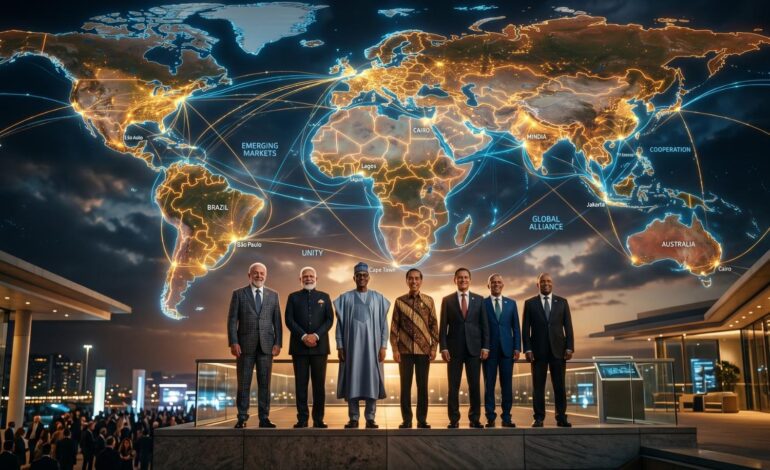
Today, we are witnessing something far more complex and unpredictable: the rise of new power blocs formed by emerging sovereign alliances, regional partnerships, and digitally connected economic groups.
These are not traditional alliances like NATO or historical trade agreements. Instead, they are fluid, strategic, and often built around shared economic survival, energy security, technology access, and geopolitical independence.
This shift is redefining how countries behave, trade, and even survive.
At the center of this transformation lies a critical concept:
This term describes countries and regions forming flexible but powerful alliances that prioritize sovereignty, economic independence, and strategic collaboration over traditional global alignment.
🌐 CHAPTER 1 — WHAT ARE EMERGING SOVEREIGN GROUPS?
Emerging sovereign groups are not formal organizations in the traditional sense. Instead, they are adaptive geopolitical ecosystems.
They often form around:
- Energy cooperation (oil, gas, renewables)
- Digital infrastructure and AI development
- Trade route security
- Currency stabilization efforts
- Regional defense coordination
Unlike Cold War alliances, these groups are:
✔ Not strictly ideological
✔ Not permanently fixed
✔ Not dependent on one global leader
Instead, they are built on mutual benefit and shifting global pressures.
🔍 Real-World Example
One of the clearest examples is the growing cooperation between BRICS nations, which is gradually evolving into a broader economic alternative system.
Similarly, ASEAN countries are strengthening intra-regional trade independence instead of relying heavily on Western economies.
⚙️ CHAPTER 2 — WHY THESE POWER BLOCS ARE FORMING NOW
The rise of emerging sovereign groups is not random—it is a direct response to global instability.
There are five major driving forces:
1. 💸 Economic Fragmentation
Global supply chains have become vulnerable due to:
- Pandemics
- Wars
- Trade sanctions
- Currency fluctuations
Countries now prefer regional resilience over global dependence.
2. ⚡ Energy Security Crisis
Energy is no longer just a commodity—it is a weapon and a survival tool.
Nations are forming alliances to secure:
- Oil and gas routes
- Renewable energy partnerships
- Nuclear cooperation agreements
3. 🧠 Technological Sovereignty
AI, chips, and data control are now geopolitical assets.
Countries don’t want to depend on a single tech superpower anymore.
4. 🪖 Security Uncertainty
Traditional military alliances are being questioned as conflicts become more hybrid (cyber + economic + military).
5. 🌐 Multipolar World Reality
The world is no longer controlled by one center of power.
Instead, influence is distributed across:
- USA
- China
- EU
- India
- Regional coalitions
🏛️ CHAPTER 3 — HOW THESE GROUPS ARE CHANGING GLOBAL POLITICS
The impact of emerging sovereign groups is visible in three major areas:
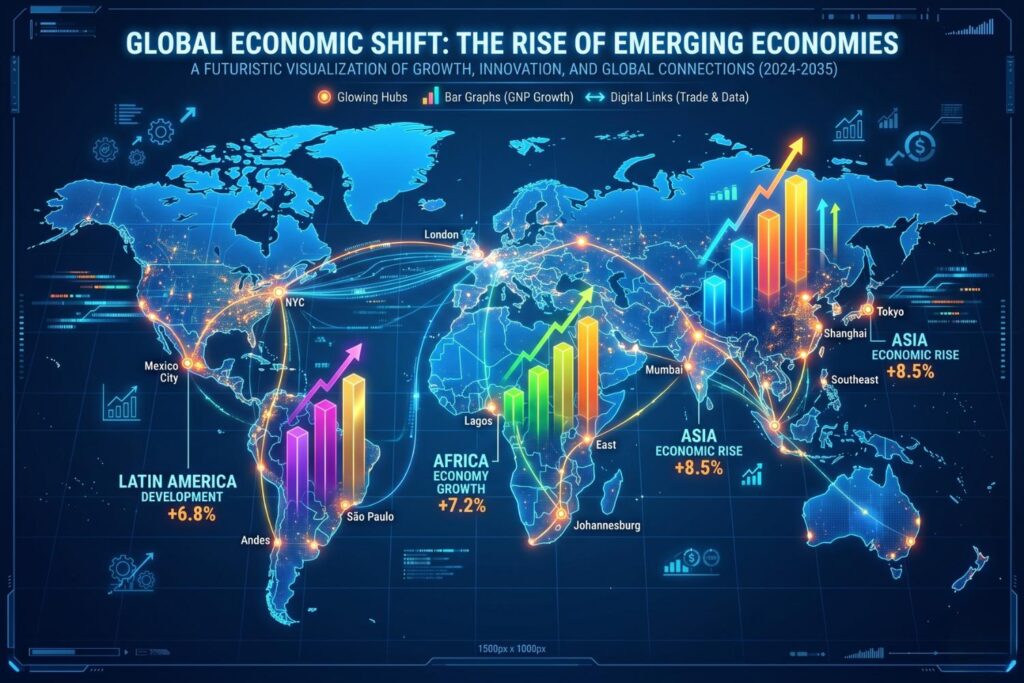
🔁 1. Shift from Globalization to Regionalization
Globalization is not disappearing—but it is being replaced by regional globalization.
Trade is increasingly happening within:
- Asia-Pacific networks
- Middle Eastern energy corridors
- African continental trade zones
💱 2. Currency Power Shifts
There is growing experimentation with:
- Local currency trade settlements
- Digital currencies backed by regional coalitions
- Reduced dependency on USD-based systems
🛰️ 3. Digital Geopolitical Warfare
Modern alliances are also formed in cyberspace:
- Data sovereignty laws
- AI governance coalitions
- Cybersecurity defense networks
📊 CHAPTER 4 — REAL-WORLD CASE STUDIES
To understand this shift, let’s look at real-world geopolitical movements:
🇧🇷🇷🇺🇮🇳🇨🇳🇿🇦 BRICS Expansion
BRICS is no longer just symbolic.
It is evolving into:
- A parallel economic system
- A platform for alternative development banks
- A discussion hub for de-dollarization
🇹🇷🇸🇦🇮🇷 Middle East Strategic Realignment
Countries historically in conflict are now exploring:
- Energy cooperation
- Trade normalization
- Regional security frameworks
🇮🇩🇲🇾🇻🇳 ASEAN Stability Model
Southeast Asia is becoming a model of:
- Non-aligned economic cooperation
- Manufacturing diversification
- Supply chain independence
🔮 CHAPTER 5 — WHAT THE FUTURE LOOKS LIKE
The rise of emerging sovereign groups suggests one major conclusion:
👉 The world is moving toward multi-polar interdependence
This means:
- No single global ruler
- Multiple competing systems
- Overlapping alliances
- Constant geopolitical negotiation
⚠️ The New Reality
Instead of one global order, we now have:
- Competing financial systems
- Parallel technology ecosystems
- Regional security frameworks
- Hybrid diplomacy models
🌍 FINAL THOUGHT
The idea of a “single world order” is fading.
In its place, emerging sovereign groups are quietly building a multi-layered global system—one that is more complex, less predictable, but arguably more balanced.
And this transformation is only beginning.