




William Shatner Warning to Humanity Raises Concerns About the Future of Our Planet
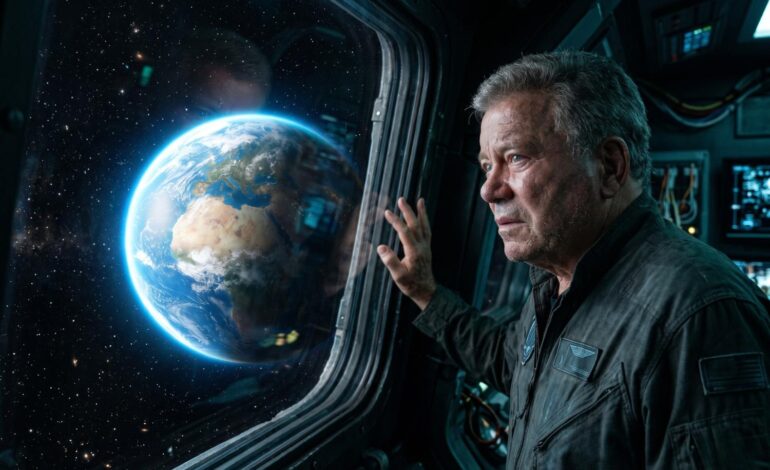

Few voices in modern pop culture carry the weight and wisdom of William Shatner. Best known for his iconic role as Captain James T. Kirk in Star Trek, Shatner has spent decades inspiring generations to imagine humanity’s future among the stars. Yet his recent reflections have shifted from hope to concern, offering what many now describe as the William Shatner warning for humanity.
After his historic journey into space aboard Blue Origin’s suborbital flight, Shatner returned to Earth not with excitement or celebration, but with a sobering message about the fragility of our planet. His words have sparked global conversations about climate change, environmental destruction, and the urgent need for humanity to reconsider its relationship with Earth.
This William Shatner warning is not science fiction. It is a deeply personal and emotional reflection from someone who experienced the stark contrast between Earth’s beauty and the darkness of space firsthand.
The Experience That Changed William Shatner’s Perspective
In October 2021, William Shatner became the oldest person ever to travel to space at the age of 90. The trip, organized by Blue Origin, lasted just over ten minutes, but the emotional impact was profound.
Shatner expected awe and wonder. Instead, he experienced what he later described as profound sadness.
He looked down at Earth and saw a thin blue layer protecting life below. Beyond it was the cold emptiness of space — dark, lifeless, and unforgiving.
This view gave birth to the now-famous William Shatner warning. He realized how incredibly delicate Earth’s atmosphere is and how vulnerable our planet has become due to human activity.
He later described the experience as feeling like witnessing a funeral rather than a celebration.
This emotional response surprised many people who expected excitement from a man who had spent decades portraying space exploration’s greatest fictional hero.
Understanding the Core of the William Shatner Warning
At its heart, the William Shatner warning is about environmental awareness.
His message is simple:
Humanity has no backup planet.
For decades, space exploration has inspired dreams of colonizing Mars or building civilizations beyond Earth. But Shatner’s firsthand experience challenged this optimism.
He emphasized that Earth is uniquely alive, vibrant, and beautiful in a universe that appears otherwise silent and empty.
His warning encourages humanity to stop imagining escape routes and instead focus on protecting the one world we already have.
The urgency behind the William Shatner warning resonates because it comes from someone who literally crossed the boundary between Earth and space.
He saw with his own eyes how thin the atmosphere truly is.
That realization transformed his perspective forever.
Why the William Shatner Warning Matters Today
The timing of the William Shatner warning could not be more relevant.
The world faces growing environmental challenges:
- Rising global temperatures
- Severe floods and droughts
- Melting polar ice caps
- Massive wildfires
- Air pollution crises
- Biodiversity collapse
Scientists have issued warnings for decades, but Shatner’s message connects emotionally in a way scientific reports often cannot.
His words make people feel the vulnerability of our planet rather than simply understand it intellectually.
This emotional connection is why the William Shatner warning has captured global attention.
People are listening because the message comes not from politics or activism, but from direct human experience.
How Space Changes Human Perspective
Astronauts often describe something called the “overview effect.”
This psychological phenomenon occurs when viewing Earth from space.
It creates a sense of unity, interconnectedness, and profound appreciation for life.
The William Shatner warning reflects this exact effect.
Seeing Earth suspended in darkness made him realize that all human life exists within an incredibly fragile protective shell.
National borders disappear.
Political divisions vanish.
What remains is one shared home.
This perspective shift explains why many astronauts become environmental advocates after returning to Earth.
Shatner’s warning joins a long tradition of space travelers urging humanity to care for the planet.
Public Reaction to the William Shatner Warning
The public response has been intense and emotional.
Many praised Shatner for speaking honestly about his experience.
Others were surprised by the depth of sadness in his reflections.
Social media users around the world discussed the William Shatner warning, sharing clips of his emotional post-flight interview and reflecting on its meaning.
Environmental activists welcomed his comments as powerful validation of urgent climate concerns.
Even critics of commercial space tourism acknowledged the importance of his message.
The warning sparked discussions far beyond celebrity news.
It became a global reflection on humanity’s future.
William Shatner’s Legacy Beyond Star Trek
For decades, William Shatner symbolized optimism about humanity’s future in space.
Captain Kirk represented courage, exploration, and technological progress.
That is why the William Shatner warning carries such emotional significance.
It feels like a message from the future itself.
When someone so closely associated with hopeful visions of space exploration delivers a cautionary message about Earth, people pay attention.
Shatner’s warning does not reject exploration.
Instead, it reminds us that true progress begins with responsibility.
We cannot dream of reaching other worlds while neglecting our own.
The Environmental Lessons Humanity Must Learn
The William Shatner warning highlights several urgent lessons:
Earth Is Rare
No discovered planet matches Earth’s life-supporting conditions.
The Atmosphere Is Fragile
The protective layer sustaining life is astonishingly thin.
Human Activity Has Consequences
Pollution and environmental destruction threaten planetary stability.
There Is No Immediate Escape
Colonizing another planet is not a near-term solution.
Collective Action Is Essential
Protecting Earth requires global cooperation.
These lessons are not theoretical.
They are immediate realities humanity must confront.
Can the William Shatner Warning Inspire Change?
Warnings only matter if they inspire action.
The power of the William Shatner warning lies in its emotional authenticity.
People often ignore abstract data.
But personal stories move hearts.
Shatner’s reflections could encourage:
- Greater environmental awareness
- Support for sustainability initiatives
- Climate-focused education
- Political pressure for greener policies
- Personal lifestyle changes
If enough people internalize his message, the warning could become a turning point in public consciousness.
A Final Reflection on Humanity’s Future
The William Shatner warning is ultimately a message of hope disguised as concern.
It reminds us that Earth is worth protecting precisely because it is precious.
Space showed Shatner what matters most:
Life itself.
Our oceans, forests, skies, and ecosystems are extraordinary miracles in a vast universe of emptiness.
Humanity’s future depends not only on exploring the stars but on preserving the world that made us possible.
If we heed the William Shatner warning, we may still build a future worthy of our greatest dreams.
The message is clear:
There is no Planet B.
There is only Earth.
And the time to protect it is now.